

2 car garage
September 25, 2026
When you’re shopping for a metal garage, carport, or steel building, you’ll hear the phrase “14 gauge steel framing” a lot. But what does it actually mean? Is it strong enough for your needs? And when should you step up to 12 gauge?
These are fair questions — especially when you’re making a significant investment. The wrong choice can mean a building that can’t handle local weather, or one that costs more than it needs to. This guide breaks it all down in plain language so you can walk into the buying process with confidence.
14 gauge steel framing refers to the thickness of the steel tubing used to build the structural frame of a metal building. It shows up in the vertical legs, roof arches, horizontal girts, and base rails — basically the skeleton that holds everything else up.
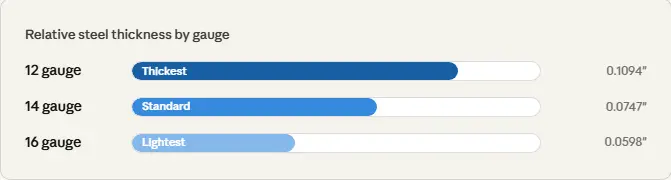
Here’s the part that trips most people up: gauge numbers run backwards. A lower gauge number means thicker steel. So 12 gauge is thicker and heavier than 14 gauge. And 16 gauge is thinner than both. Once you know that, everything else makes sense.
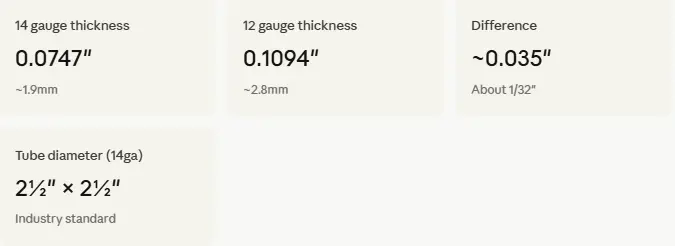
In most metal buildings, 14 gauge tubing is used in a square cross-section — typically 2½” × 2½”. This is the national standard for residential-grade steel structures, and it’s what the vast majority of garages and carports in the U.S. are built with.
14 gauge galvanized steel is approximately 0.0747 inches thick — just under 3/32 of an inch. That may sound thin, but the real-world strength of a steel building depends on much more than wall thickness alone.
Most residential metal building frames use galvanized steel, which has a zinc coating that protects against rust and corrosion. This is important because the frame is often exposed to moisture, temperature swings, and humidity over its lifetime. Galvanized 14 gauge steel balances affordability with long-term durability — making it the go-to choice for manufacturers nationwide.
14 gauge didn’t become the industry standard by accident. It hits a sweet spot that most buyers need:
For most homeowners building a two-car garage, a barn, or a backyard workshop in a moderate climate, 14 gauge framing is more than up to the job. You’re not cutting corners — you’re making a smart, informed choice.
Because 14 gauge is the standard, it shows up in a wide range of building types across the country. Here’s where it works best:
14 gauge framing works especially well in buildings up to 30 feet wide and under 10 feet tall. Once you start pushing beyond those dimensions — or into severe weather zones — it’s worth having a conversation about upgrading to 12 gauge.
This is the question almost every metal building buyer asks. Here’s an honest, direct comparison:
| Factor | 14 Gauge | 12 Gauge |
| Wall Thickness | 0.0747″ (~1.9mm) | 0.1094″ (~2.8mm) |
| Tube diameter | 2½” × 2½” | 2¼” × 2¼” |
| Price | Lower — best value | 8–15% higher cost |
| Snow load rating | Moderate — good for most regions | Higher — better for Northeast/Midwest |
| Wind load rating | Good for most climates | Better for hurricane/tornado zones |
| Typical warranty | 10–12 years structural | 20-year structural (most manufacturers) |
| Best for | Residential, mild climates, ≤30′ wide | Commercial, harsh climates, tall/wide builds |
| Available for certification | Yes — most states | Yes — required in some states |
| Recommended building height | Under 10 feet | 10 feet and above |
Gauge is important — but it’s only one piece of the puzzle. The overall strength of your metal building depends on a system of components working together:
The gauge tells you the wall thickness of the tubing, but the outer diameter matters too. Both 14 and 12 gauge frames use similar tube sizes, so the key difference is how much steel is in the wall itself.
A strong frame on a weak foundation is still a weak building. Proper anchoring — whether that’s wedge anchors in concrete or auger anchors in soil — is often just as important as the gauge you choose. Wind uplift is a real force, and it starts at the ground.
Tighter frame spacing (how often legs and rafters are placed along the length of the building) distributes load more evenly. In high-wind or heavy-snow regions, closer frame spacing combined with 14 gauge can sometimes outperform wider-spaced 12 gauge framing.
A vertical roof — where panels run vertically down the slope — sheds snow and rain faster than a boxed-eave or regular-style roof. If you’re in a moderate-snow region and want to stick with 14 gauge, a vertical roof can significantly reduce snow load stress on the frame. Many buyers in the Carolinas, Georgia, and Tennessee use 14 gauge with vertical roofing to great effect.
Not all 14 gauge steel is created equal. Galvanized steel with a proper zinc coating will outlast uncoated or poorly coated alternatives by years — sometimes decades. Always ask your manufacturer what type of steel and what coating process they use.
For most homeowners in most parts of the U.S. — yes, absolutely. Here’s a more specific breakdown:
14 gauge is the national standard for a reason. A well-built 14 gauge steel garage or carport will handle typical wind, rain, and snow loads in the majority of U.S. zip codes. It’s structurally sound, meets most local building codes, and is strong enough for vehicle storage, lawn equipment, and personal workshops.
If you’re running a fabrication shop, automotive service center, or any business with overhead cranes or heavy equipment movement, 12 gauge is the smarter choice. The additional stress from industrial use is more than what 14 gauge is designed to handle long-term.
Geography matters a lot here. A 14 gauge garage in Atlanta is a completely different situation from one in Buffalo or Kansas City. If you’re in an area with regular heavy snowfall (over 20 lbs per square foot ground snow load) or frequent high winds (tropical storms, nor’easters, tornadoes), talk to your building specialist about 12 gauge before you commit.
Let’s get specific about what you’re actually getting with 14 gauge construction:
Transparency matters. Here are the situations where 14 gauge may not be your best option:
Three questions will guide nearly every decision:
14 gauge is the more affordable option. If you’re working within a firm budget and your application fits the residential profile, 14 gauge delivers excellent value. Don’t pay for 12 gauge thickness if your building doesn’t need it.
Look up your county’s wind speed and ground snow load requirements. The ASCE 7 standard is what most local codes reference. If your area has high design wind speeds (above 90 mph) or significant snow loads, lean toward 12 gauge or consult an engineer.
Personal storage and residential garages → 14 gauge is the call. Light commercial, tall structures, or anything with regular heavy equipment → start the conversation about 12 gauge.
At Viking Metal Garages, we don’t treat steel gauge as a sales pitch. We treat it as an engineering decision — one that depends on your location, your building’s purpose, and your long-term needs.
Whether you need a simple one-car carport or a wide-span commercial steel building, Viking Metal Garages delivers structures built to last — with the framing strength to back it up.
14 gauge steel framing is the backbone of most residential metal buildings in the U.S. — and for good reason. It offers the right balance of strength, cost, and versatility for garages, carports, barns, and workshops that don’t face extreme structural demands.
The key takeaways from this guide:
Still not sure which option is right for your project? Our team at Viking Metal Garages will help you make the call based on your zip code, building size, and intended use — no pressure, just straight answers.
Expand each item below to explore a few helpful answers before moving to the next blog post.
Yes — for most residential garages in moderate climates, 14 gauge is the industry standard and more than sufficient. It handles everyday loads, common weather conditions, and vehicle storage with ease. Only extreme weather zones or large commercial builds typically require an upgrade.
Neither is universally "better" — it depends on your situation. 14 gauge is better for budget-conscious residential buyers in mild to moderate climates. 12 gauge is better for harsh weather regions, tall or wide buildings, and commercial applications. Most homeowners won't need 12 gauge.
14 gauge steel is approximately 0.0747 inches thick, or about 1.9mm. In metal building applications, it's typically formed into 2½" × 2½" square tubing used for structural framing members.
14 gauge framing works well for buildings up to 30 feet wide and under 10 feet tall. For wider spans, taller leg heights, or buildings in high-wind and heavy-snow regions, 12 gauge provides a stronger structural package.
Not easily. Metal buildings use galvanized 14 gauge steel, which has a zinc coating that prevents rust and corrosion. With proper installation and basic maintenance, galvanized steel framing can last 40–50 years or more without significant rust issues.
Yes. 14 gauge steel buildings can be certified to meet local building code requirements in most U.S. states. Certifications cover wind and snow load ratings. Some states may require 12 gauge for certain applications — check your local codes or ask your building specialist.
Absolutely. Even a 12 gauge building can fail without proper anchoring. How your building is secured to the foundation — whether concrete anchors, auger anchors, or mobile-home style anchors — plays just as large a role in structural performance as the gauge of the frame itself.
Expect to pay roughly 8–15% more for 12 gauge framing in typical residential building sizes. The exact difference depends on building dimensions, manufacturer, and current steel prices. For many buyers, the peace of mind is worth it — especially in high-risk weather zones.
Last Call for Summer Savings! Get Up To 30% Off |View Offer >>
Last Call for Summer Savings! Get Up To 30% Off |View Offer >>
Last Call for Summer Savings! Get Up To 30% Off |View Offer >>
Last Call for Summer Savings! Get Up To 30% Off |View Offer >>
Last Call for Summer Savings! Get Up To 30% Off |View Offer >>
Last Call for Summer Savings! Get Up To 30% Off |View Offer >>
Last Call for Summer Savings! Get Up To 30% Off |View Offer >>
Last Call for Summer Savings! Get Up To 30% Off |View Offer >>
Last Call for Summer Savings! Get Up To 30% Off |View Offer >>
Last Call for Summer Savings! Get Up To 30% Off |View Offer >>
Last Call for Summer Savings! Get Up To 30% Off |View Offer >>
Last Call for Summer Savings! Get Up To 30% Off |View Offer >>
Last Call for Summer Savings! Get Up To 30% Off |View Offer >>
Last Call for Summer Savings! Get Up To 30% Off |View Offer >>