
Metal Garages
September 18, 2026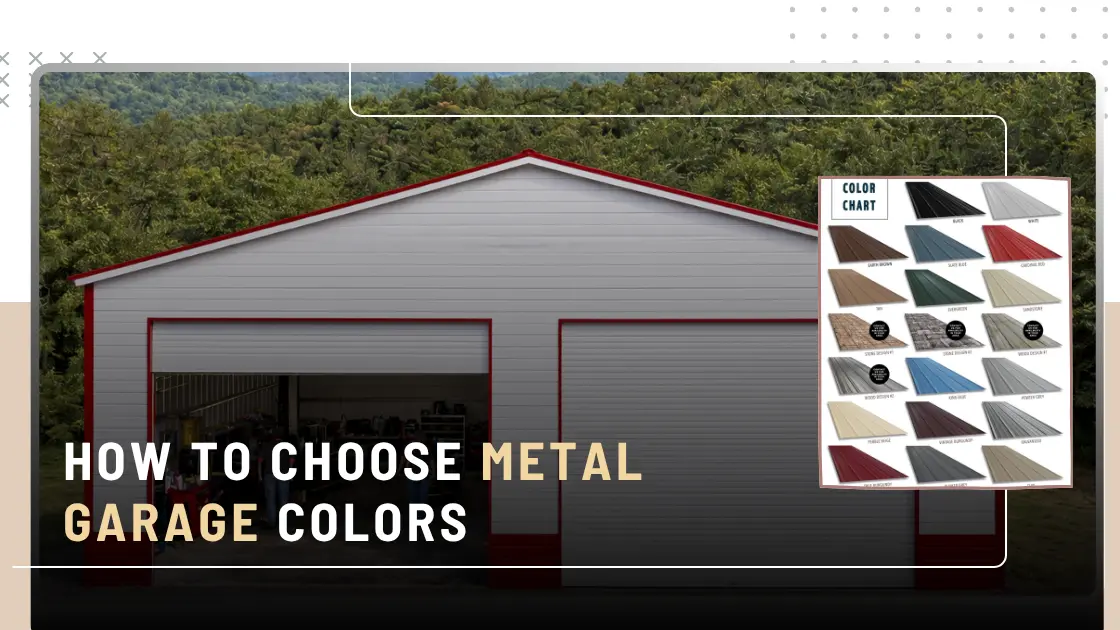
Most people spend weeks researching garage sizes, roof styles, and door configurations. Then they pick a color in five minutes — and regret it for the next twenty years.
Color is one of the most visible decisions you’ll make about your metal garage. It’s the first thing your neighbors see. It’s what your eye goes to every time you pull into your driveway. And unlike a roof style or a door type, color is something people notice even when they’re not trying to.
Get it right and your garage looks like it was always supposed to be there. Get it wrong and it looks like an afterthought — or worse, a structure that was ordered from a catalog without thinking about how it fits the rest of your property.
This guide walks you through everything you need to know about metal garage colors — from the factors that should drive your decision to the specific combinations that work, the common mistakes to avoid, and the color psychology that most buyers never think about. Whether you’re building a two-car garage in a suburban neighborhood or a workshop on a rural property, the right color choice is closer than you think.
Here’s the thing about exterior color: it affects perception in ways that go beyond aesthetics.
Your garage is often one of the first structures visible from the street — sometimes more prominent than the house itself, depending on your lot. A poorly chosen color creates a jarring visual that visitors, guests, and potential future buyers all notice immediately. A well-chosen color, by contrast, is invisible in the best way — everything just looks cohesive and intentional.
A metal garage that looks like it belongs on your property adds genuine perceived value. Appraisers and buyers don’t always think consciously about color when evaluating a property, but they absolutely respond to visual harmony. A garage that looks mismatched or out of place is a subtle red flag that the overall property may lack attention to detail.
Your garage doesn’t exist in isolation. It sits next to your home, your fence line, your landscaping, and whatever else is on your property. The color you choose either reinforces all of that visual context or fights against it. One bad color choice can undermine an otherwise well-kept property.
Before you browse color swatches, think through these factors. They’ll narrow your options significantly and help you make a decision you’ll actually be happy with long-term.
This is the starting point for almost every successful garage color decision. Your garage should either match your home’s primary exterior color, match a secondary accent color on your home, or complement the overall palette without clashing.
If your home is a warm beige with brown trim, a cool charcoal or slate garage will create visual tension. If your home is white with black shutters, a white or light gray garage with black trim is nearly perfect.
Take a photo of your home’s exterior and keep it in front of you while you’re choosing colors. What you think you remember and what’s actually on your house are often different.
This one gets overlooked constantly — and it’s a significant mistake. Your roof is a major surface area visible from the street. If your metal garage roof clashes with your home’s shingles, the whole property looks disconnected.
Charcoal and dark gray asphalt shingles (the most common roofing material in the U.S.) pair well with: white, light gray, dark gray, charcoal, and most neutral-toned panel colors. They tend to fight with warm earth tones like tan or sand unless the combination is handled carefully.
Brown or cedar-toned shingles pair well with: earth tones, greens, browns, and warm whites. They clash with cool grays, blues, and charcoal.
Where your property sits matters. A metal garage on a rural property surrounded by trees and open land reads very differently than the same garage on a suburban lot three feet from your neighbor’s fence.
For wooded or natural settings: earthy tones — forest green, brown, tan — blend into the environment and look intentional. For open rural land: classic red/white or barn combinations look at home. For suburban settings: neutral tones that match or complement the home are almost always the safest and most successful choice.
This isn’t a design consideration — it’s a practical one. Before you fall in love with a specific color combination, check your HOA guidelines and local ordinances. Some neighborhoods have explicit rules about exterior building colors, requiring matching or similar tones to the primary residence. Some municipalities have restrictions on commercial-looking structures in residential zones.
Find out before you order. Changing the color after installation is not a small problem.
Dark colors absorb more heat — which matters in climates with intense sun exposure. A black or dark charcoal garage in Phoenix will get significantly hotter than a white or light gray one. If your garage will be used as a workshop or hobby space, interior temperature is a practical factor worth considering when you choose your panel color.
Here are the combinations that consistently work — with an explanation of why each one succeeds.
The most universally successful combination for suburban and modern residential properties. White panels are bright, clean, and match nearly every home exterior. Black trim provides crisp definition without adding visual noise.
Works best with: White, light gray, or cream home exteriors. Charcoal, dark gray, or black asphalt roofing.
Why it works: High contrast without conflict. The combination feels modern, deliberate, and well-maintained.
The darker, more dramatic version of the above. Charcoal panels have become one of the most popular choices in recent years — particularly for modern and contemporary home styles. The white trim keeps it from feeling heavy or institutional.
Works best with: White, gray, or light-colored home exteriors. Dark roofing of any color.
Why it works: Charcoal reads as sophisticated and modern. It hides surface dust and minor weathering better than white. The contrast from white trim prevents it from looking flat.
The classic American barn combination. Timeless on rural properties, farmhouse settings, and any lot with a traditional aesthetic. Bold without being loud — because it’s so familiar in the rural American landscape that it reads as entirely natural.
Works best with: White, cream, or beige home exteriors. Gray or dark roofing.
Why it works: Cultural familiarity makes red feel appropriate rather than aggressive. It’s a statement color that has a defined context — and in the right setting, nothing else looks quite as right.
A warm, earth-toned combination that blends naturally with wooded settings, country properties, and homes with traditional or craftsman-style architecture. Understated and harmonious.
Works best with: Homes in earth tones, browns, or warm neutrals. Wooded surroundings. Brown or weathered-wood-tone roofing.
Why it works: The tonal similarity between panels and trim creates a soft, unified look rather than a stark contrast. It feels organic in natural environments.
An underused but highly effective combination for rural and semi-rural properties. Forest green or hunter green panels with clean trim look appropriately agricultural without being flashy.
Works best with: Natural settings, wooded properties, and homes with green or neutral exteriors. Works surprisingly well with red brick homes.
Why it works: Green recedes visually against natural backgrounds, making the garage look like it belongs in the landscape rather than sitting on top of it.
A modern industrial combination that works well for workshop garages, commercial-adjacent properties, and homes with contemporary architecture. Less traditional than the other combinations, but increasingly popular.
Works best with: Gray, white, or dark-colored home exteriors. Urban or semi-urban settings.
Why it works: Gray is neutral enough to avoid conflict with almost any surrounding, while the colored trim adds the personality that plain gray lacks.
The same color can look completely right on one home style and completely wrong on another. Here’s a quick style-matching guide.
Modern architecture favors clean lines, minimal ornamentation, and a restrained palette. The most successful metal garage color combinations for modern homes are:
Avoid: busy two-tone combinations, traditional barn red, or warm earth tones that conflict with the clean aesthetic.
Traditional architecture is warm, symmetrical, and familiar. Garage colors for traditional homes should reinforce that warmth and formality.
Avoid: bold contrasts, modern charcoal combinations, or industrial-looking color pairings that conflict with the home’s traditional feel.
Farmhouse aesthetics are warm, relaxed, and rooted in American rural tradition. The garage should look like it grew up on the same property.
Avoid: industrial grays, stark black, or anything that reads as modern and corporate rather than warm and rural.
Ranch homes are horizontal, low-profile, and typically surrounded by open land. Garage colors that complement ranch architecture:
Avoid: sharp vertical contrasts or bold colors that fight with the home’s low horizontal profile.
These are the metal garage colors U.S. buyers are choosing most right now — and why each one has earned its popularity.
The fastest-growing color choice in the metal garage market over the last three years. Charcoal reads as modern, sophisticated, and low-maintenance. It hides surface weathering better than lighter colors, makes trim details pop, and works with a wide range of home exterior styles.
A perennial top seller for good reason. White is the safest, most universally applicable color for any residential setting. It maximizes visual brightness, matches or complements nearly every home exterior, and projects a clean, well-maintained image.
Classic and enduring. Barn red is dominant on rural properties, farms, and any setting with agricultural character. It’s not the right choice for a suburban home — but in its element, nothing else looks as natural or as right.
Gaining consistent momentum on wooded properties and lots with natural surroundings. Green panels blend into tree lines and natural landscapes in a way that no other color does. Expect to see this one continue growing as more buyers move toward properties with natural settings.
A softer alternative to charcoal that works well in regions with bright sun. Light gray reflects more heat, brightens the overall property, and still projects a clean modern aesthetic. Popular in the Southwest and Southeast where the light quality makes charcoal feel visually heavy.
Warm neutrals that complement earth-tone homes, brick exteriors, and rural properties. Less visually striking than other options, but extremely harmonious in the right setting. Never looks out of place — which is exactly what a lot of buyers want.
Most buyers never think about this — but color communicates something before anyone consciously processes what they’re seeing. Here’s what the most common metal garage colors signal.
White communicates cleanliness, order, and care. A white garage reads as maintained and intentional.
Charcoal and dark gray communicate sophistication and modernity. They signal that the owner pays attention to design trends and aesthetics.
Red communicates energy, tradition, and American rural identity. In the right context — a farm, a country property — it feels deeply appropriate. In the wrong context, it reads as loud.
Green communicates connection to nature and environmental awareness. In natural settings, it makes the structure feel like it belongs.
Brown and earth tones communicate warmth, stability, and rootedness. Properties with earth-toned outbuildings feel settled and permanent.
Light gray and beige communicate calm and neutrality. They’re the colors of properties that don’t want to draw attention to any single element — everything should feel harmonious rather than focal.
Understanding what your color choice communicates helps you align your garage’s visual identity with the overall impression you want your property to make.
These are the errors that create the most regret — and all of them are avoidable.
Your garage roof is a major surface area. If it clashes with your home’s roofing color or the garage panel color, it creates visual chaos that no amount of trim detail can fix. Always check panel color against roof color before you decide.
Picking a panel color from a swatch card without holding it against your home’s actual exterior is one of the most common mistakes buyers make. Color looks different in isolation than it does next to other colors. Visit your property with your color options and look at them in the actual light conditions of your site.
Bold colors — bright red, strong blue, intense green — can look stunning on rural properties with space around them. On a suburban lot with neighbors close by, those same colors can feel aggressive and visually intrusive. Read your setting before committing to a bold choice.
Trying to match your garage color exactly to your home can backfire if the tones are close but not quite identical. A near-match looks like a mistake. Either match precisely using the same color family, or choose a clearly intentional complementary color instead.
The trim color is what defines the visual detail and character of your garage. Buyers often focus entirely on the panel color and treat trim as an afterthought. In reality, trim color often matters as much as panel color — it’s what creates the contrast, defines the edges, and makes the overall combination feel finished.
A color that looks great in photos can look completely wrong on your actual property depending on the surrounding vegetation, soil color, and light quality. Take your property’s natural surroundings seriously when making your decision — not just the architectural context.
When you order a metal garage from Viking Metal Garages, you’re not choosing from two or three options. The customization goes significantly deeper than that.
Standard offerings include 15–20 panel colors across a range of neutrals, earth tones, and classic combinations. Every order can specify the panel color and trim color independently — they don’t need to match and often look better when they contrast.
Popular two-tone combinations that buyers are currently choosing:
Your roof color is separate from your panel color. The most common roof color choices are charcoal, tan, and white — chosen based on your home’s roofing color and the climate you live in. Lighter roof colors reduce heat absorption, which is a practical consideration for garage workshops in warm climates.
Wainscoting adds a second panel color to the lower portion of your garage walls — creating a two-tone exterior that adds visual depth and protects the lower panels from ground-level moisture and debris. It’s a finishing detail that elevates the overall appearance significantly.
Explore the full range of metal garage customization options to see current color availability and combination examples.
Not every metal building dealer gives you real flexibility on color. Some offer five or six options and call it customization.
Viking Metal Garages offers a genuine range of panel colors, trim colors, roof colors, and wainscoting options that let you build a garage that actually fits your property — not just a generic structure in the color someone else chose for you.
Every order is built to your specifications. You choose your panel color, trim color, roof color, and any secondary details independently — and the team can walk you through the combinations that work best for your home’s style and exterior palette.
What you get when you order through Viking Metal Garages:
Whether you’re customizing a two-car metal garage, an RV garage, or a workshop-style building, the color selection process is part of the quote conversation — not an afterthought.
The best metal garage color decisions aren’t made by finding what looks exciting in a brochure. They’re made by understanding your home’s existing palette, your property’s setting, and the visual impression you want your entire exterior to project.
Neutral tones are almost never wrong. Classic combinations — white/black, red/white, charcoal/white — are classic precisely because they work across decades of changing design trends. And matching your color choice to your home’s architectural style is the single most reliable path to a garage that looks like it was always supposed to be there.
Take your time with this decision. Hold colors against your actual home in your actual outdoor light. Think about trim separately from panels. And don’t forget the roof.
When you’re ready to pick your colors and get a real quote, the team at Viking Metal Garages makes the customization process straightforward — and you’ll be able to see exactly what your combination looks like before you commit.
Expand each item below to explore a few helpful answers before moving to the next blog post.
Charcoal gray, white, and barn red are consistently the top three. Charcoal has surged in recent years for modern and suburban properties. White remains the most universally safe choice. Barn red dominates on rural and agricultural properties.
Yes. Viking Metal Garages offers 15–20 standard panel colors with independent trim and roof color selection. You can specify two-tone combinations and wainscoting details to create a garage that matches your property's existing color palette.
Neutral tones — white, light gray, and charcoal — tend to have the broadest appeal to future buyers and appraisers. Matching or closely complementing your home's exterior color creates the strongest visual harmony, which is what most buyers respond to positively when evaluating a property.
Not necessarily. Exact matching can be difficult to execute perfectly and a near-match often looks worse than a deliberate contrast. The better approach is to choose a color that complements your home's palette — matching the same color family or choosing an intentional accent that works with your home's trim color.
Yes. Darker panel colors absorb more solar heat, which raises interior temperature — particularly relevant for workshop use in warm climates. White and light gray panels reflect more heat. If your garage will be used as a workspace, lighter panel colors or added insulation are worth considering.
The most reliable approach: use your home's primary body color for the panels and a darker version of the same tone (or your home's trim color) for the garage trim. High-contrast two-tone combinations — like charcoal panels with white trim — work well when the colors don't appear on the home's exterior at all, creating a visually independent but harmonious structure.
Check your HOA guidelines before ordering. Most HOAs with color restrictions require outbuildings to either match the primary residence or fall within an approved palette. Viking Metal Garages can work within those parameters — the color selection process during your quote is the right time to bring up any restrictions.
Yes. Wainscoting adds a second color panel to the lower portion of your garage's exterior walls, creating a classic two-tone effect that adds visual depth and a more finished appearance. It's one of the most popular color customization options and adds very little to the total building cost.
Last Call for Summer Savings! Get Up To 30% Off |View Offer >>
Last Call for Summer Savings! Get Up To 30% Off |View Offer >>
Last Call for Summer Savings! Get Up To 30% Off |View Offer >>
Last Call for Summer Savings! Get Up To 30% Off |View Offer >>
Last Call for Summer Savings! Get Up To 30% Off |View Offer >>
Last Call for Summer Savings! Get Up To 30% Off |View Offer >>
Last Call for Summer Savings! Get Up To 30% Off |View Offer >>
Last Call for Summer Savings! Get Up To 30% Off |View Offer >>
Last Call for Summer Savings! Get Up To 30% Off |View Offer >>
Last Call for Summer Savings! Get Up To 30% Off |View Offer >>
Last Call for Summer Savings! Get Up To 30% Off |View Offer >>
Last Call for Summer Savings! Get Up To 30% Off |View Offer >>
Last Call for Summer Savings! Get Up To 30% Off |View Offer >>
Last Call for Summer Savings! Get Up To 30% Off |View Offer >>