2 car garage
September 25, 2026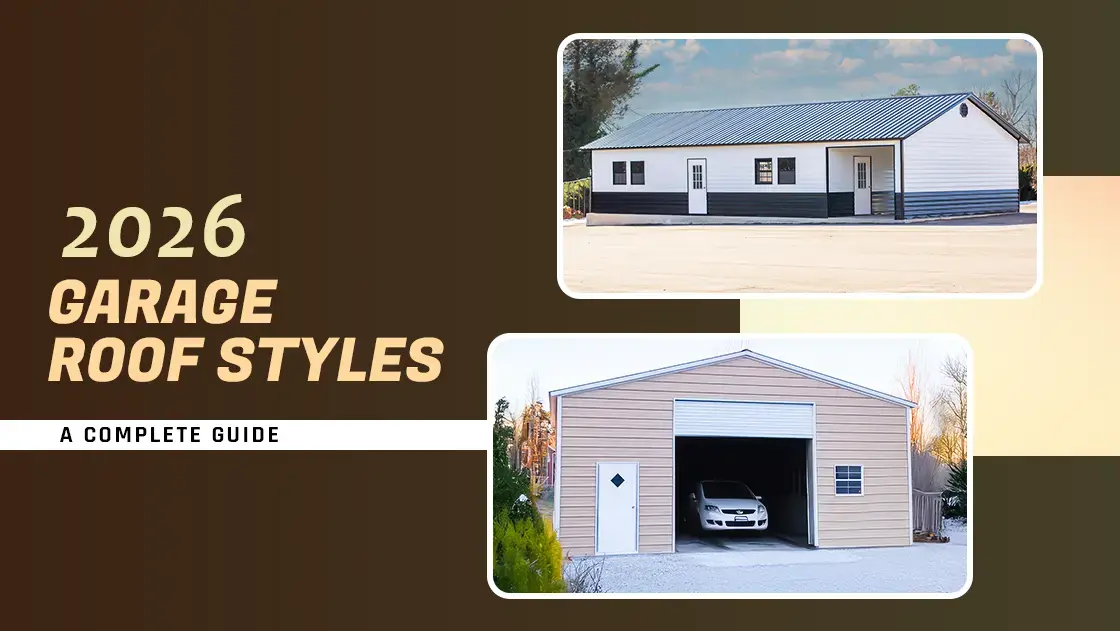
The roof you choose determines how well your garage handles heavy snow in Minnesota, sustained downpours in Georgia, and the kind of long-term durability that makes a steel structure worth every penny. Choose the wrong roof, and you’re looking at moisture buildup, potential structural strain, and more maintenance than you bargained for. Choose the right one, and your garage stands strong for decades.
In this guide, we break down every major garage roof style available in 2026 — vertical roof, regular roof, and boxed eave — and show you exactly which option is right for your climate, budget, and intended use.
Metal garages come in three primary roof configurations. Each has a distinct panel orientation, aesthetic, and performance profile. Here’s a quick rundown before we go deeper:
Think of it this way: the vertical roof is built for performance, the boxed eave is built for appearance, and the regular roof is built for affordability. Let’s look at each in detail.
A vertical roof garage features roof panels installed running from the ridge (peak) down to the eave (edge) — perpendicular to the ground. This orientation is reinforced by hat channels (horizontal metal purlins) running underneath the panels for added structural rigidity. Vertical roof garages also typically include extra bracing and a more robust frame, making them the go-to choice for buyers in regions that deal with real weather.
The physics are simple but important. When rain or snowmelt hits a vertically oriented panel, gravity pulls it straight down and off the edge of the roof — following the seams rather than pooling against them. With horizontal panels, water can sit in panel laps and seams, increasing the risk of leaks over time.
A vertical roof essentially turns your garage into a rain management system. Water doesn’t linger. It exits quickly. That means fewer leaks, less rust risk at the seams, and a longer life for the roof panels themselves.
If you live in Minnesota, Colorado, Michigan, New York, or any state where snowfall is measured in feet – not inches – a vertical roof isn’t just the better choice. It’s the smart choice.
Snow has weight. A wet, heavy snowfall can put serious load on a roof. Vertical panels allow snow to slide off naturally, rather than accumulating on a flat horizontal surface. Less accumulation means less snow load on your frame – and that means a longer-lasting structure with less risk of damage.
Parts of the Upper Midwest and Rocky Mountains regularly see 100+ inches of snow per year. A vertical roof on a properly engineered steel garage handles these conditions far more effectively than any horizontal roof style.
The main downside of a vertical roof is cost. Because of the extra material, labor, and engineering involved, a vertical roof typically costs more upfront than a regular or boxed eave roof.
That said, most buyers who invest in a vertical roof find the long-term savings — in avoided repairs, reduced maintenance, and extended lifespan — more than justify the initial premium. If you live anywhere with real weather, the math almost always favors going vertical.
A regular roof — also called a standard roof — is the most basic metal garage roof style. Panels run horizontally from one end of the building to the other, and the ends are left open (no boxed eave). It’s the simplest design, which is why it’s also the most affordable. Regular roof garages have been a staple of the prefabricated metal building industry for decades.
A regular roof is a solid choice in mild climates that don’t deal with heavy snow, sustained heavy rain, or extreme weather. Think central Texas, southern California, Arizona, or parts of the Southeast where winters are mild and rainfall is moderate. If your primary use case is a simple hobby garage or equipment shelter in a dry, temperate region — and budget is a key concern — a regular roof can be a perfectly functional choice.
Advantages:
Limitations:
The boxed eave roof — sometimes called an “A-frame” style — sits in the middle of the three options in terms of both design and performance. Like the regular roof, panels run horizontally. But unlike the regular roof, the eaves (the overhanging edges at the sides) are enclosed with trim pieces, giving the building a cleaner, more finished look. This style is popular with homeowners who want their metal garage to complement the look of their house.
Like the regular roof, the boxed eave performs best in areas with moderate rainfall and little to no snow. The horizontal panel orientation still means water and snow don’t shed as efficiently as they do on a vertical roof. However, the closed eave offers slightly better protection against wind-driven rain than a standard open-eave roof.
Boxed eave garages are a popular choice in the mid-South, mid-Atlantic, and other regions where occasional heavy rain is the primary weather concern — but heavy snow is rare.
Pros:
Cons:
Here’s how the three roof styles stack up across the most important performance and value categories:
| Category | Vertical Roof | Boxed Eave | Regular Roof |
| Snow Handling | Excellent — sheds naturally | Poor — panels trap snow | Poor — panels trap snow |
| Rain Runoff | Excellent — follows seams down | Moderate | Moderate to poor |
| Durability | Highest — reinforced framing | Moderate | Basic |
| Maintenance | Lowest long-term | Moderate | Higher in wet climates |
| Upfront Cost | Higher investment | Mid-range | Most affordable |
| Lifespan | Longest (30+ years w/ care) | Moderate | Shorter in harsh weather |
| Aesthetic | Clean, premium look | Polished, residential | Basic, functional |
| Best Climate | All U.S. regions | Mild to moderate | Mild and dry only |
The verdict is clear: vertical roofs outperform both alternatives in nearly every weather-related category. The cost difference between styles is often smaller than the cost of a single major repair caused by roof failure under snow or rain stress.
Where you live should drive your roof style decision more than almost anything else. Here’s how to think about it by region:
Minnesota, Wisconsin, Michigan, New York, Montana, Colorado, Wyoming. Snow load capacity is dramatically better with vertical panels. No other style can match it for northern climates.
Louisiana, Florida, Mississippi, Gulf Coast. Intense, sustained rainfall — especially during hurricane season — demands superior drainage. Vertical roof’s fast runoff dramatically reduces seam leak risk.
Atlantic and Gulf Coast communities face wind-driven rain. Vertical roof garages, especially with thicker-gauge steel, offer better resistance to lateral rain penetration. Look for wind-rated engineering certifications.
Central California, Desert Southwest, dry Pacific Northwest summers. A boxed eave or regular roof can work here — especially for budget-focused buyers. Even so, vertical still wins on longevity.
Five key factors to weigh when making your roof style decision:
If there’s one takeaway from this guide, it’s this: your roof style matters more than most people realize when buying a metal garage. It’s not just an aesthetic choice — it’s a performance and durability decision that affects everything from snow load capacity to long-term maintenance costs.
Vertical roof garages are the clear top performer for most U.S. buyers. They handle snow better, manage rain more effectively, require less long-term maintenance, and simply last longer than regular or boxed eave styles. If you’re in a region with real weather — and most of the U.S. qualifies — vertical roof is the right call.
Regular roof and boxed eave options still make sense for budget-focused buyers in mild, dry climates. But even there, the price gap between styles has narrowed, and the long-term value of going vertical is hard to ignore.
At Viking Metal Garages, we build steel structures designed to last. Whether you need a vertical roof garage for a northern winter, a heavy-duty workshop, or a custom steel building for your commercial property — we’re here to help you get it right the first time.
Expand each item below to explore a few helpful answers before moving to the next blog post.
The vertical roof is the strongest and most durable style available for metal garages. Its vertically oriented panels shed snow and rain more effectively, and vertical roof designs typically include additional structural components — like hat channels and heavier-gauge purlins — that reinforce the frame. For any area with significant weather exposure, vertical roof is the top-rated choice.
Yes — significantly better. Vertical roof panels allow snow to slide off naturally due to gravity, reducing snow load accumulation on the frame. This is critical in high-snowfall states like Minnesota, Michigan, Colorado, and New York. A regular or boxed eave roof with horizontal panels can trap snow and create structural stress over time, especially after heavy or wet snowfall events.
Vertical roof garages consistently last the longest of the three styles, particularly in regions with challenging weather. The combination of better drainage, reduced moisture retention at seams, and heavier-gauge framing gives vertical roofs a significant durability advantage. With proper maintenance, a well-built vertical roof metal garage can provide reliable service for 30 to 40-plus years.
For most buyers, yes — especially in snow states, rain-heavy regions, or for heavy-use applications. The higher upfront cost is offset by lower maintenance expenses, fewer leak issues, and a longer building lifespan. When you calculate total cost of ownership over 20 to 30 years, vertical roof garages typically offer better value than either horizontal panel alternative.
A vertical roof is the best choice for high-rainfall environments. The top-to-bottom panel orientation channels water off the roof quickly and efficiently, following the seams downward rather than pooling in panel laps. This reduces the risk of water infiltration at seams, rust development, and long-term moisture damage — all common issues with horizontal panel roofs in wet climates.
Last Call for Summer Savings! Get Up To 30% Off |View Offer >>
Last Call for Summer Savings! Get Up To 30% Off |View Offer >>
Last Call for Summer Savings! Get Up To 30% Off |View Offer >>
Last Call for Summer Savings! Get Up To 30% Off |View Offer >>
Last Call for Summer Savings! Get Up To 30% Off |View Offer >>
Last Call for Summer Savings! Get Up To 30% Off |View Offer >>
Last Call for Summer Savings! Get Up To 30% Off |View Offer >>
Last Call for Summer Savings! Get Up To 30% Off |View Offer >>
Last Call for Summer Savings! Get Up To 30% Off |View Offer >>
Last Call for Summer Savings! Get Up To 30% Off |View Offer >>
Last Call for Summer Savings! Get Up To 30% Off |View Offer >>
Last Call for Summer Savings! Get Up To 30% Off |View Offer >>
Last Call for Summer Savings! Get Up To 30% Off |View Offer >>
Last Call for Summer Savings! Get Up To 30% Off |View Offer >>