
Metal Garages
September 18, 2026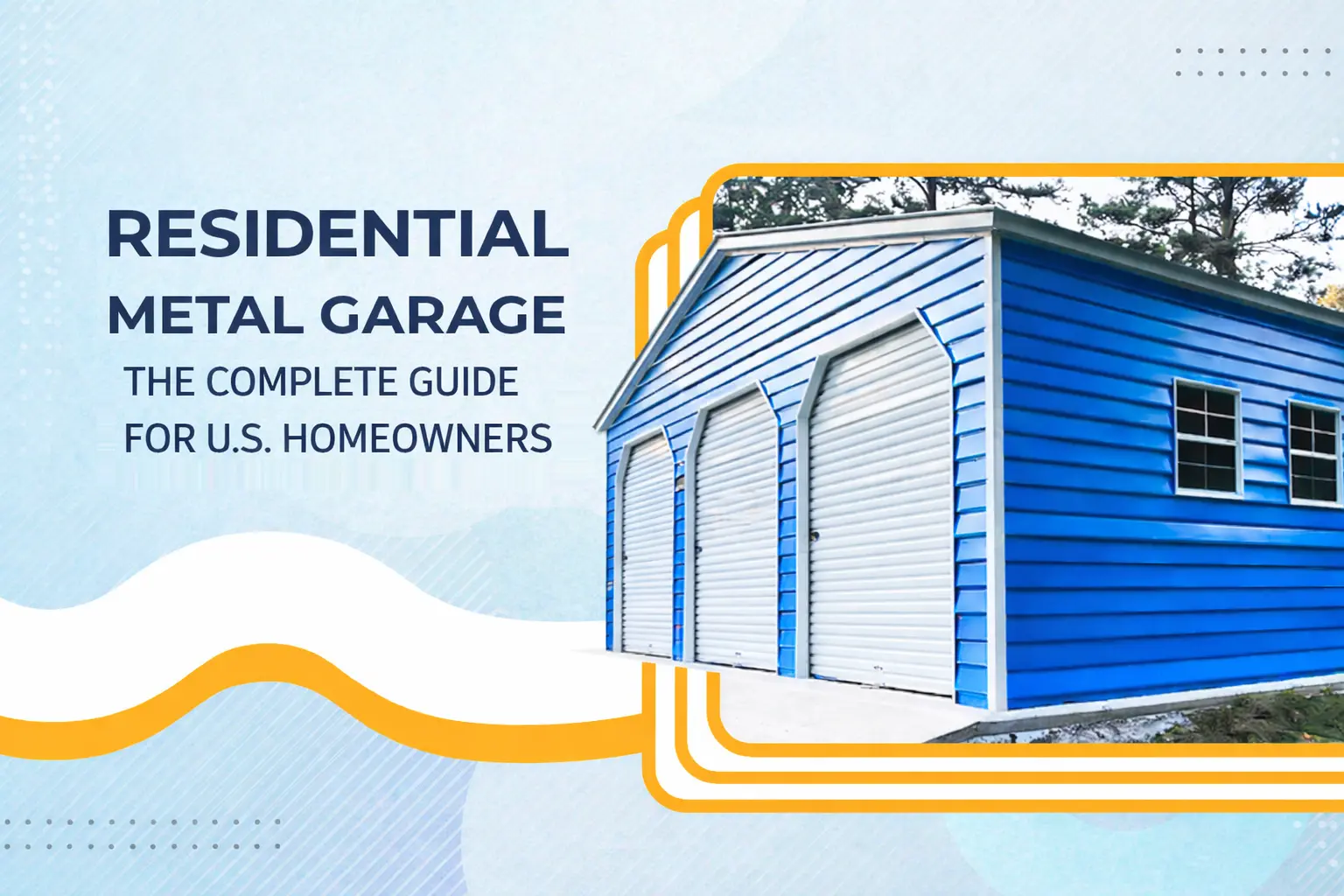
If you’ve been searching for a better garage solution, you’re not alone. Millions of U.S. homeowners are ditching outdated wood structures and turning to residential metal garages — and for good reason.
Wood rots. It warps. It attracts pests. And after a storm, it often doesn’t stand up to what nature throws at it.
A residential metal garage is different. It’s built tougher, lasts longer, and can be customized to fit your property, your budget, and your lifestyle. Whether you need a two-car garage in Texas, a workshop in Ohio, or a large RV cover in Florida — steel is now the smart choice for homeowners across the country.
In this guide, we’ll cover everything you need to know: from types and costs to installation, common mistakes, and how to choose the right building for your home. By the end, you’ll have a clear picture of whether a steel garage is right for you — and exactly how to get started.
A residential metal garage is a prefabricated or custom-built structure made primarily from steel — designed for home use. These buildings are used as car storage, workshops, hobby spaces, home offices, and more.
Unlike traditional garages that are stick-framed and built from scratch on-site, most metal garages are manufactured off-site and assembled at your property. This makes them faster to install, more consistent in quality, and often more affordable than wood-framed alternatives.
The steel panels and framing are galvanized or coated to resist rust, making them ideal for virtually every U.S. climate — from the humid Gulf Coast to the snowy Midwest and the dry Southwest.
Key characteristics of residential metal garages:
Not all metal garages are the same. The right size and configuration depends on how many vehicles you own, what else you plan to store, and how much space you have on your property.
A single-car garage typically starts at 12×20 feet and goes up to 14×24 feet. These are perfect for homeowners who need basic vehicle protection for one car, truck, or motorcycle.
They’re also a popular option for converting into a personal workshop or hobby room. Compact footprint, lower cost, fast installation.
The most popular residential steel garage size. A double-car garage starts at 18×20 feet and commonly goes up to 24×30 feet or larger.
It gives you room for two full-size vehicles plus space on the sides for tool storage, a workbench, or a chest freezer. If you’re unsure what size to choose, a double-car garage is rarely the wrong call.
Need room for three vehicles? A boat? A tractor? Triple-wide garages start at 30 feet wide and can stretch much wider depending on your needs.
These are popular on rural properties, farms, and larger suburban lots where versatile storage space is a priority.
Can’t find a standard size that fits your lot or lifestyle? Custom metal garages are built to your exact specifications — specific width, length, wall height, door placement, window layout, roof pitch, and color.
Viking Metal Garages specializes in custom metal garage buildings that are made-to-order and delivered across the U.S.
There’s a reason residential steel garages have surged in popularity over the last decade. Here’s what makes them stand out from traditional wood-framed structures:
Structural steel is rated to handle high-wind loads and heavy snow. While a wood garage can sag, warp, or suffer rot over time, a properly built steel garage retains its structural integrity for decades with minimal upkeep.
Steel doesn’t crack, split, or shrink with temperature changes the way wood does. And it won’t be attacked by termites, carpenter ants, or wood-boring beetles — a major problem in many parts of the U.S.
Yes, a quality steel garage has an upfront cost. But compare it to what wood construction costs in 2026 — lumber prices are volatile, labor is expensive, and maintenance adds up every year.
Metal garages require no painting, no staining, no termite treatments, and no rotting boards to replace. Over a 10–20 year period, a residential metal garage typically costs far less to own than a comparable wood structure.
Steel buildings are tested and engineered for specific wind and snow loads. Whether you’re in a hurricane zone in Florida or a heavy snow region in the Great Lakes area, you can get a certified residential steel garage building that’s built for your local conditions.
Most prefab metal garages can be installed in 1–3 days, depending on size and site conditions. Traditional stick-framed garages can take weeks or longer — and that’s if you can get a contractor available.
Once your steel garage is up, you’re largely done. Occasional cleaning and periodic inspection of fasteners and sealants is all most owners do. No annual repainting. No pest control contracts. No rot remediation.
When you’re shopping for a residential steel garage building, here are the key features to pay attention to:
The roof you choose affects both aesthetics and performance. There are three main options:
Regular Roof (Standard): The most affordable option. Horizontal panels with rounded corners. Good for mild climates with low precipitation. Not ideal for heavy snow or rain areas.
Boxed-Eave Roof (A-Frame Standard): Horizontal roof panels with a traditional A-frame profile. More attractive than regular roofs and a step up in performance. A solid middle ground.
Vertical Roof (A-Frame Vertical): The best option for most homeowners. Panels run vertically, which means rain and snow shed off more efficiently. Vertical roofs also carry higher wind and snow load certifications. If you’re in a region with real weather, this is the one to choose.
Standard wall heights start at 6 feet for basic carports and go up to 16 feet or more for full enclosed garages. Most homeowners choose 9–12 foot walls to allow clearance for lifted trucks, campers, or overhead storage systems.
You can customize your garage with:
Most manufacturers offer 15–20 standard color choices for panels and trim. Popular combinations include charcoal/white, brown/tan, and red/white for a barn look.
If you’re in a zone that requires permits, you’ll want to ask specifically about engineer-certified buildings. These come with stamped drawings and are engineered to meet local building codes for wind speed and snow load.
Viking Metal Garages offers certified buildings across the U.S. — ask about certification requirements in your state.
One of the first questions homeowners ask is: “How much does a residential metal garage cost?”
The honest answer: it depends. But here’s a useful framework.
| Garage Size | Approximate Price Range |
| 12×20 Single Car | $3,500 – $6,000 |
| 18×21 Double Car | $5,500 – $9,000 |
| 24×30 Two-Car (Full) | $8,000 – $14,000 |
| 30×40 Triple Wide | $12,000 – $22,000 |
| 40×60 Large Custom | $18,000 – $35,000+ |
Note: Prices vary by region, customization level, certification, and site conditions. Contact Viking Metal Garages for an accurate quote for your zip code.
| Category | Metal Garage | Wood Garage |
| Lifespan | 40–60+ years | 10–15 years (with maintenance) |
| Maintenance | Very low | High (paint, pest, rot) |
| Install Time | 1–3 days | 2–4 weeks |
| Pest Resistance | Excellent | Poor |
| Fire Resistance | Good | Poor |
| Weather Resistance | Excellent (certified options) | Moderate |
| Customization | High | High |
| Upfront Cost | Low to Moderate | Moderate to High |
| Long-Term Cost | Lower | Higher |
| Resale Value | Good | Good |
| Eco-Friendliness | Recyclable steel | Tree harvesting |
The verdict: for most U.S. homeowners in 2026, a residential metal garage offers better value, lower lifetime cost, and superior durability compared to wood construction.
One of the biggest advantages of modern residential metal garage buildings is how customizable they are. You’re not locked into a standard box.
Here’s what you can personalize:
If you have something specific in mind, the team at Viking Metal Garages can walk you through all the options and build a quote around your exact needs.
Understanding how installation works helps set expectations and prevents surprises. Here’s a general overview of what the process looks like when you order from a reputable dealer.
Step 1: Get a Quote Submit your dimensions, location, and customization preferences to get a price. For accurate pricing, you’ll need to know your zip code (for delivery/regional pricing), your preferred size and configuration, and whether certification is required in your area.
Step 2: Confirm Permits Before ordering, check with your local county or city building department about permit requirements. Many jurisdictions require permits for permanent structures above a certain square footage. Your dealer should be able to help with certified drawings if needed.
Step 3: Site Preparation Prepare your foundation before the installation crew arrives. This typically means a level, compacted gravel base or a poured concrete slab. The site must be accessible for the installation crew and their equipment.
Step 4: Delivery and Installation The crew arrives with all pre-fabricated components. Most standard-size residential metal garages are assembled in 1–3 days. Larger or more complex custom buildings may take longer.
Step 5: Final Inspection Walk through the completed building with the installer to confirm everything matches your order — doors, windows, anchoring, and panel alignment.
Step 6: Enjoy It That’s it. No waiting months for a contractor to finish framing. No weather delays dragging on for weeks. Your garage is ready.
With so many options, how do you make sure you pick the right one? Here’s a practical checklist:
Metal garages are incredibly versatile. Here’s how homeowners across the U.S. are using them:
There’s no shortage of metal building dealers out there. But not all of them operate the same way.
Viking Metal Garages has built a reputation across the U.S. for transparent pricing, quality steel construction, and genuine customer support. Here’s what sets them apart:
If you’re looking for a structure that’s durable, affordable to own long-term, customizable, and fast to install — a residential metal garage is hard to beat.
Steel outperforms wood in almost every category that matters to a homeowner: longevity, weather resistance, maintenance, and total cost of ownership. Add in the ability to customize size, roof style, color, and features — and you have a building that genuinely fits your property and your life.
Whether you need a compact single-car garage, a large double-wide workshop, or an RV-ready structure — residential steel garage buildings can be built to match.
The next step is simple: figure out your ideal size, check your local permit requirements, and get a quote.
Click here to get your free residential metal garage quote from Viking Metal Garages →
Our team will help you choose the right configuration for your property, walk you through any certification requirements, and give you an upfront price with no surprises.
Expand each item below to explore a few helpful answers before moving to the next blog post.
A basic single-car metal garage starts around $3,500–$6,000 installed. A full double-car enclosed garage typically runs $7,000–$14,000 depending on size, roof style, and customization. Larger triple-wide or custom buildings can range significantly higher. Site prep (gravel or concrete) is a separate cost. The best way to get an accurate price is to request a quote based on your zip code and configuration.
In most U.S. jurisdictions, yes — especially for permanent enclosed structures. Permit requirements vary by state, county, and city. Some rural areas have minimal requirements; others require full engineering drawings and inspections. Always check with your local building department before ordering. Viking Metal Garages can provide engineer-certified drawings for customers who need them.
A quality steel garage, properly installed and maintained, can last 40–60 years or more. The steel is galvanized or Galvalume-coated to resist rust. Proper anchoring, good site drainage, and periodic inspection of fasteners will maximize the life of your building.
Absolutely. Residential metal garage buildings are highly customizable. You can choose width, length, wall height, roof style, panel colors, trim colors, door count and size, window placement, insulation, and more. Most dealers including Viking Metal Garages offer made-to-order configurations.
Most standard residential metal garages are installed in 1–3 days after delivery. Larger custom buildings or more complex configurations may take 3–5 days. Site prep (foundation) should be completed before the installation crew arrives.
Yes — but the key is to order a certified building rated for your local conditions. Vertical roof garages with proper engineering certifications can handle significant snow loads and high winds. Always confirm your building's wind and snow load ratings match your local building code requirements.
Yes. Insulation can be added to walls and the roof cavity during installation or after the fact. Common options include fiberglass batt insulation and spray foam. If you plan to use your garage as a workshop, studio, or office, insulation is strongly recommended for both comfort and energy efficiency.
A carport is an open or semi-open structure — no walls, or partial walls — that provides overhead coverage. An enclosed metal garage has four walls, a roof, and doors. Enclosed garages offer significantly better security, weather protection, and versatility. Most homeowners looking for long-term vehicle protection prefer a fully enclosed residential steel garage.
Last Call for Summer Savings! Get Up To 30% Off |View Offer >>
Last Call for Summer Savings! Get Up To 30% Off |View Offer >>
Last Call for Summer Savings! Get Up To 30% Off |View Offer >>
Last Call for Summer Savings! Get Up To 30% Off |View Offer >>
Last Call for Summer Savings! Get Up To 30% Off |View Offer >>
Last Call for Summer Savings! Get Up To 30% Off |View Offer >>
Last Call for Summer Savings! Get Up To 30% Off |View Offer >>
Last Call for Summer Savings! Get Up To 30% Off |View Offer >>
Last Call for Summer Savings! Get Up To 30% Off |View Offer >>
Last Call for Summer Savings! Get Up To 30% Off |View Offer >>
Last Call for Summer Savings! Get Up To 30% Off |View Offer >>
Last Call for Summer Savings! Get Up To 30% Off |View Offer >>
Last Call for Summer Savings! Get Up To 30% Off |View Offer >>
Last Call for Summer Savings! Get Up To 30% Off |View Offer >>