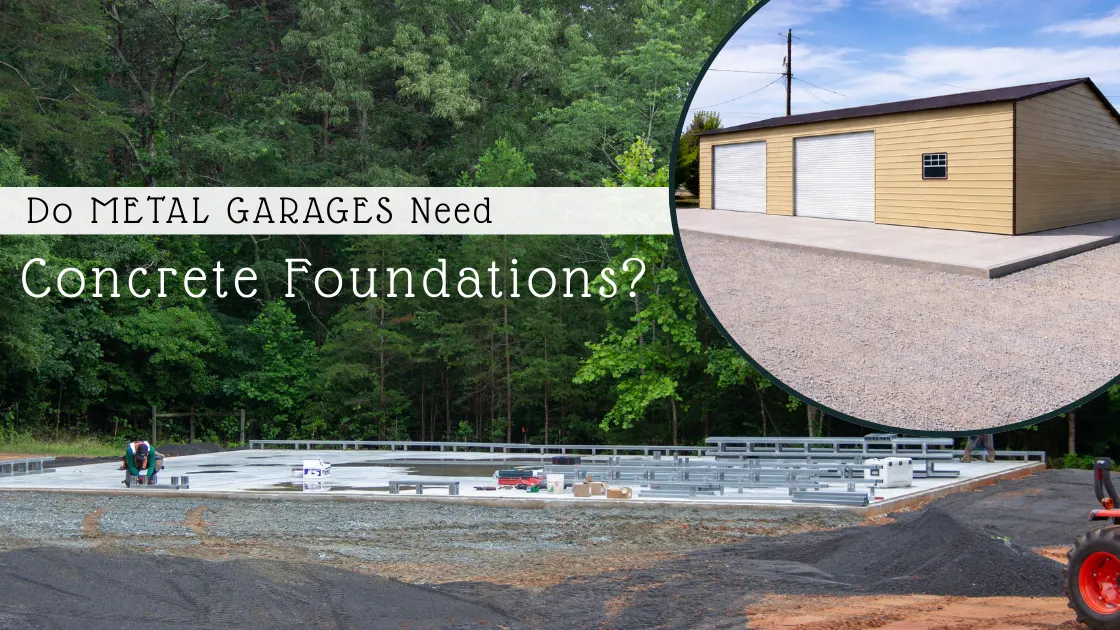
Yes, metal garages need a concrete foundation because it provides stability, durability, and proper anchoring for steel structures. However, some owners of prefab metal garages may sometimes install gravel or ground foundations. It means the foundation type depends on local codes and the building’s structural requirements.
Metal garages are stronger yet flexible, so a buyer can customize them to get a personalized structure for car parking. These metal garage buildings don’t rot, warp, or attract termites, which is a major advantage that attracts many garage buyers. This is why they are growing in popularity across the country.
Whether you are buying a three-car garage or one car garage, the foundation is what your garage sits on. It affects the strength, safety, and lifespan of the entire structure. Many buyers ask, “Is a concrete foundation best for my garage?”
The answer depends on several factors.
Well, concrete slabs are the most common base for steel garages because they offer a hard, level surface that supports the full weight of the building. They also help anchor the structure against wind and shifting ground. Therefore, choosing the right foundation is just as important as choosing the right metal garage building.
Why a Strong Foundation Is Important for Metal Garages
A solid foundation is not only required for a strong base. It’s crucial to protect the entire structure from the ground up so it can withstand harsh weather. Here are some more reasons why the foundation is crucial.
- Structural Stability: Without a firm base, metal garage buildings can shift or settle over time. This puts stress on the frame and walls, and as a result, it can cause cracks, warping, and uneven doors.
- Proper Anchoring: It is also essential because steel garages need to be bolted down securely. It allows for many popular uses of prefab buildings for heavy lifting. A concrete foundation allows anchor bolts to be set deep into the slab. This keeps the building in place during strong winds or storms.
- Moisture Protection: Ground moisture can damage the base of any structure. If you have a concrete slab, it creates a barrier between the soil and the building’s frame. This way, you can prevent rust and corrosion on metal garage buildings.
If you want long-term durability, focus on a quality base because a well-built foundation can last for decades. It reduces the need for future repairs and keeps your steel garage performing at its best.
What Foundation Options Are Available for Metal Garages?
Mainly three types of foundation options are popular. However, each one has different costs, strengths, and best uses, so understanding their importance is key to finding the best option for your garage.
1. Concrete Slab Foundation
A concrete slab is the top choice for most metal garage installations. It provides a flat, stable surface for the entire structure. Custom metal garages benefit most from this option because enclosed buildings with walls and doors need a solid base to function properly.
Concrete foundations use anchor bolts set into reinforced concrete. These bolts connect the steel frame directly to the slab. Reinforced concrete adds extra strength using steel rebar inside the mix. This is especially important in areas with heavy loads or extreme weather.
2. Gravel Foundation
A gravel foundation can be the best option if you are looking for a cost-effective solution that also works well for prefab metal garages. Because gravel allows water to drain away from the structure. This reduces the risk of pooling water and erosion around the base, which is often the biggest problem.
However, gravel offers less structural strength than concrete. Buildings on gravel can shift more easily over time. This is why it is not recommended for large or enclosed steel garages. If you are still using it, always check local building codes before choosing this option. But before that, also decide on the dimensions of the metal garage, as many building codes have height restrictions.
3. Ground Installation
Ground installation means placing the structure directly on the soil. You can only use it if you are planning for a very small building. Because it works best for temporary setups or simple storage shelters. This option has the lowest upfront cost but might not be effective for long-term uses.
Additionally, many local building codes do not allow permanent structures on bare ground. Always verify with your local authority before choosing this method.
When Do Steel Garages Require Concrete Foundations?
When you want to install a large structure, a building for a commercial purpose, and you live in a high wind zone. Let’s have a closer look at each one.
1. Large Structures
Size plays a big role in foundation requirements. Any steel garage over a certain square footage will need a permitted foundation. Many larger steel buildings are best suited for business applications because they can support greater loads throughout their frames. A concrete slab distributes that load evenly and keeps the structure from sinking or shifting. Without it, the building can become unstable over time.
2. Commercial Usage
Businesses have different demands than homeowners. They have to store heavy vehicles, machinery, and large inventories. These buildings see constant foot and vehicle traffic every day. This is why commercial metal garages must have a concrete foundation. It handles that level of use far better than gravel or bare ground. It resists cracking under heavy loads and stays level through years of regular use.
3. High Wind Zones
If you live in a region where tornadoes or high winds are common phenomena, a concrete foundation becomes vital. However, most coastal and inland regions have strict building codes for structures that must withstand strong winds. So, steel garages in these areas must be anchored with concrete to meet wind certification standards.
4. Heavy Snow Areas
Accumulated snow on the roof of a metal garage can lead to sagging and eventually to collapse because snow adds significant weight to any rooftop. In regions with heavy seasonal snowfall, that load puts real stress on the entire steel frame. A concrete foundation keeps the structure firm, so it can bear the pressure.
If you don’t have a solid base, the building can shift or crack as snow accumulates. Moreover, choose the right steel frame to handle the heavy snow. You can choose 12 gauge or 14 gauge for the side pannels and 26 gauge or 29 gauge for the roof.
Benefits of Installing Metal Garages on Concrete Slabs
Here are some top benefits of going with a concrete foundation. Explore them to understand what it takes for such a foundation to be the first choice of many garage buyers.
- Metal garages with concrete foundations have strong anchors, bolts, and screws that make the structure unshakable.
- Long-term durability that can last 30 to 50 years with proper care.
- Concrete slab provides better moisture control to prevent rust and corrosion.
- Increased structural stability that protects against shifting and settling
- Easier maintenance with a clean, level surface for repairs
- Higher resale value for properties with properly permitted metal garage buildings.
Can Custom Garages Be Installed Without Concrete?
Yes, they can be. Many small buildings for simple storage may not need a full concrete slab. And temporary structures used for seasonal equipment are another example that don’t need a concrete slab.
Rural installations on private land often have more flexibility. If local codes allow it, prefab metal garages in these settings can be placed on a gravel base. This saves money on smaller projects where permanent structures are not needed. Such flexibility also helps to maximize the functionality of a garage.
But then, you will have to prepare the site carefully, keeping the consequences in mind. Ensure the ground is level and well-drained for installation. Poor site preparation causes problems regardless of the foundation type.
Concrete vs Gravel Foundations for Metal Garages
Here is a simple comparison of the three main foundation options:
| Foundation Type | Cost | Durability | Best For |
| Concrete Slab | Higher | Very High | Custom metal garages |
| Gravel Base | Moderate | Medium | Prefab metal garages |
| Ground Install | Low | Low | Temporary structures |
Preparing Land for Garage Building Installation
Before you start pouring any concrete on the ground, wait. Ask yourself: Is the ground ready for creating a foundation? Here are some crucial steps for land preparation that you can follow.
1. Level the Ground First
Uneven ground makes the installation task so difficult for workers. Such a ground will not let the building frame sit correctly on a sloped or bumpy base. You need to fill all the low spots with compacted soil. High spots need to be graded down to match the surrounding area. Moreover, a flat, stable surface ensures the entire structure sits evenly from day one.
2. Plan for Proper Drainage
Water is one of the biggest threats to any foundation. It should always flow away from the building, not toward it. Keep this in mind when planning a foundation for your prefab metal garage. Evaluate how rainwater moves across your site and then add grading or drainage channels as per need.
If you have poor drainage, no matter how strong a concrete foundation you choose, it can crack sooner than you expect. Over time, moisture damage can occur and weaken the entire foundation of the space.
3. Choose the Right Foundation Thickness
A standard concrete slab for steel garages is typically four to six inches thick. If you choose thinner slabs, they can easily crack under heavy loads. But how thick should your garage foundation be? It depends on many factors. So, ask your metal garage dealer for specific thickness recommendations based on your building size and the purpose you want the structure for.
4. Place Anchor Bolts with Precision
Anchor bolts connect your steel garage frame directly to the concrete slab. Therefore, they must be set into the wet concrete before it fully cures. Placement must be exact; for this, each bolt needs to align perfectly with the base plates of the steel frame.
Even a small misalignment can cause major installation problems and delay your project. Double-check all measurements before the concrete is poured.
Should You Consult a Metal Garage Dealer Before Installation?
Yes, because consultation with a qualified metal garage dealer increases the chances of impeccable installation of a garage. Professional installers have many years of experience with local conditions and building requirements. Thus, they can easily understand your requirements and analyze whether it’s possible to meet them while adhering to the local building codes. They can save you from paying high fines due to improper installation.
Since building permits and foundation requirements vary by city, county, and state, dealers can help you have a good idea of which structure needs what type of permits. A knowledgeable dealer will know what applies to your area.
Moreover, wind certification is another area where dealers add value. In storm-prone regions, garages must meet specific wind ratings. Your dealer can recommend the right anchoring system to meet these standards. And larger or commercial buildings sometimes need stamped engineering drawings. A good metal garage dealer will connect you with the right professionals.
FAQs About Custom Metal Garage Foundations
1. How thick should a concrete slab be for a metal garage?
Most residential metal garages need a slab that is four to six inches thick. For heavy vehicles or commercial use, six inches or more is recommended. Always check with your metal garage dealer for exact specs.
2. Can you install metal garages on dirt?
It is possible for small, temporary structures. However, dirt provides very little stability or moisture protection. Most local codes do not allow permanent buildings on bare ground.
3. Do steel garages need footings?
In some cases, yes. Larger steel garages or those in cold climates may need perimeter footings below the frost line. This prevents the foundation from heaving during freeze-thaw cycles.
4. What foundation is best for prefab metal garages?
Concrete is still the best option for most prefab metal garages. For smaller buildings with limited budgets, a well-prepared gravel base can also work. Always verify what your local codes allow.
5. How long does a concrete foundation last?
A properly built concrete foundation can last 50 years or more. Regular inspections and sealing can extend its life even further.
6. Is a permit required to pour a concrete slab for a garage?
In most areas, yes. A building permit is typically required for any permanent structure or foundation. Contact your local building authority before starting work.
Choosing the Right Foundation for Your Metal Garage
So, now you know that choosing the wrong foundation can be dangerous to your garage and whatever you store inside. It can affect your metal garage for decades. This is why you need to take this decision seriously by choosing the best foundation type. Concrete is the best long-term option for most steel garages. It provides unmatched strength, stability, and protection from the elements.
On the other hand, gravel is a reasonable and economical alternative for smaller prefab metal garages. It works well in the right conditions. Just make sure water can drain properly and that local codes allow it. If you have a small space, ground installation can be enough, similarly to the temporary structures. Don’t miss out on local building codes because ignoring them can cause you not only financial loss, but also disturb your other business plans.
Go with a trusted metal garage dealer, as they can help you navigate these rules and plan your project from the ground up, and save you from losses. So, invest in the right foundation from the start. It is the smartest thing you can do to protect your metal garage building. Best of luck.