


2 car garage
October 23, 2026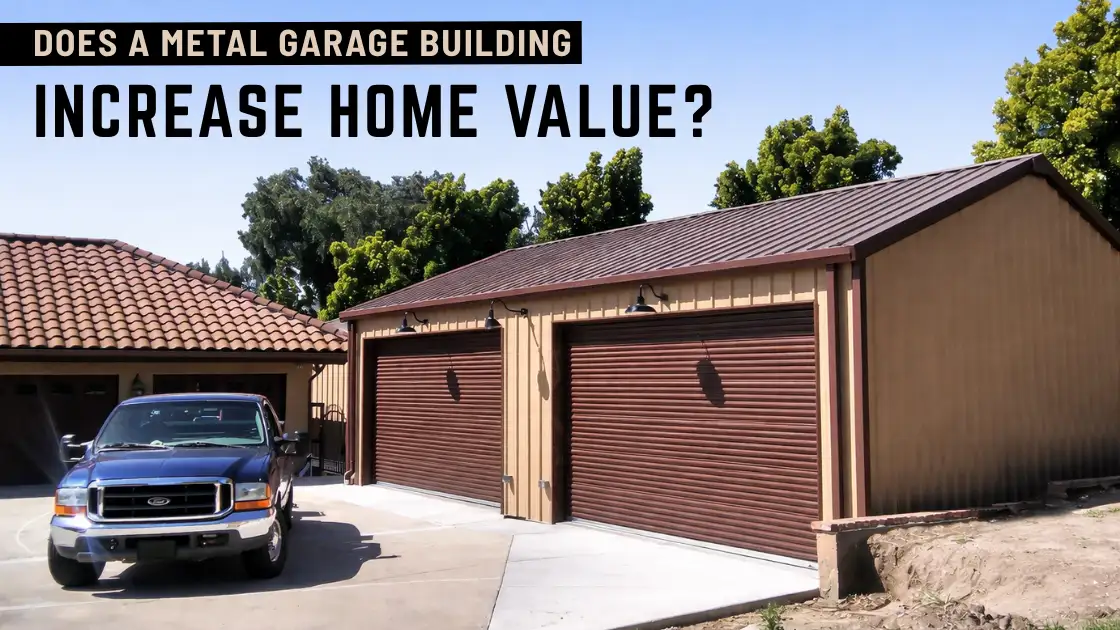
It’s one of the first questions homeowners ask when they start pricing a new steel building: does a metal garage building increase home value, or is it just a cost you absorb? The honest answer is that it absolutely does — and the numbers behind that answer are more compelling than most people expect.
But ‘does adding a garage increase home value’ is actually the easier half of the question. The more useful thing to understand is how much it adds, what determines whether you get a modest bump or a serious return, and why steel specifically tends to outperform other materials when it comes to long-term appraisal value. That’s what this guide covers — backed by data from Florida State University research, the 2025 Remodeling Magazine Cost vs. Value Report, and expert commentary from Realtor Magazine.
Quick answer: A properly permitted, permanent metal garage typically adds $15,000–$30,000 to a home’s appraised value. A two-car detached setup tends to return the full build cost — and often more.
Let’s start with the data before getting into the practical details.
A study by Florida State University found that homes with a standard-sized garage sold for roughly 13% more than comparable homes without one. On a $300,000 home, that’s $39,000 in added value from a single structure — and that’s before accounting for any premium on the steel building itself.
Realtor Magazine — the official publication of the National Association of Realtors — spoke directly with real estate professionals about this question. Peggy Patenaude of Prudential Howe & Doherty Realtors was unambiguous:
“A two-car attached or detached garage can add $30,000 to a home’s value. A one-car attached or detached garage may increase it by $15,000 to $20,000.” — Peggy Patenaude, Realtor, Realtor Magazine.
Real estate investor Grant Cardone, also quoted in the same piece, put it in even sharper terms: “The average two-car metal garage will return the investment two to two-and-a-half times. It doesn’t have to have polished floors or fancy amenities — it just has to be clean and roomy.”
The mechanism is straightforward. A well-built, properly permitted garage is classified as a permanent structure — and permanent structures are included in property appraisals. That’s how a garage that costs $15,000 to build can add $25,000 or more to your home’s appraised value.
When it comes to metal garage property value, the numbers vary depending on the size and type of structure you’re building. Here’s how the returns typically look across the most common configurations, based on current real estate industry data:
| Garage Type | Typical Steel Build Cost | Average Value Added | Estimated ROI |
|---|---|---|---|
| One-car detached metal garage | $8,000 – $18,000 | $15,000 – $20,000 | Up to 2× |
| Two-car detached metal garage | $14,000 – $28,000 | $25,000 – $30,000 | Up to 2.5× |
| Two-car attached metal garage | $12,000 – $24,000 | $20,000 – $30,000 | Up to 2× |
| Metal garage with loft / living space | $25,000 – $60,000+ | $30,000 – $60,000+ | Varies by market |
| Metal workshop / commercial garage | $20,000 – $45,000 | $20,000 – $40,000 | Market-dependent |
The detached metal garage ROI figures — particularly at the two-car level — are what most real estate professionals point to when recommending this type of addition. Angi’s December 2025 report placed the cost of a standard two-car detached garage between $14,500 and $40,300, depending on materials and location. Steel sits at the lower end of that range, which is why the effective return on a metal structure is so strong compared to wood-framed or masonry construction.
What these numbers confirm is that metal garage property value addition isn’t a marginal improvement — it’s a meaningful, appraiser-recognized asset that follows the home for its entire ownership history.
The material question matters more than most buyers realize when thinking about steel garage home value. An old wooden garage that’s been neglected — warped siding, a rotting frame, a failing roof — can actually decrease your property value. Appraisers and buyers notice, and they adjust their numbers accordingly.
A well-built steel structure, on the other hand, holds its condition for decades. Here’s why metal specifically is the stronger choice for long-term value:
Armstrong Steel, one of the largest pre-engineered building companies in the US, describes it this way: “A steel building is engineered to stay safe, functional, and hold its aesthetic value for decades. The garage you build today is going to look strikingly similar and have as much or more value in several decades — with little or no work from you.” That’s the steel garage home value proposition in one sentence.
This is one of the most common questions from homeowners considering a new steel building — and the Florida State University research addresses it directly. Their findings showed that the increase in home price was essentially the same whether the garage was attached or detached from the main structure.
So from a pure detached metal garage ROI perspective, being physically separate from the house doesn’t penalize you. The choice between attached and detached comes down to your lot, your budget, and your intended use — not which one appraises higher.
| Attached Metal Garage | Detached Metal Garage | |
|---|---|---|
| Build cost | 10–15% less (shares walls/utilities) | 10–15% more (standalone structure) |
| Appraisal value added | Similar to detached (FSU study) | Similar to attached (FSU study) |
| Conversion potential | Can be converted to finished living space | Can be converted or rented separately |
| Permitting complexity | Higher — must match home architecture | Lower — stands independently |
| Best fit | Daily vehicle access, shared utilities | Workshop, storage, rental income |
One advantage attached garages hold: if you eventually convert the space into a finished room — with drywall, flooring, and HVAC — that square footage counts toward your home’s livable area in the appraisal. That’s a second layer of value a detached structure can’t offer in the same way.
Not every metal garage adds the same value to a property. Based on real estate appraisal standards and consistent buyer feedback, these are the six factors that have the biggest influence on your return:
This is non-negotiable. A garage built without proper permits can hurt your resale rather than help it — buyers will demand it be brought up to code before closing, or they’ll walk away entirely. Before ordering any metal building, check with your local building department about permit requirements, setback rules, and any HOA restrictions that apply to accessory structures on your lot.
A concrete slab foundation is what separates a permanent structure from a temporary one in the eyes of property appraisers. Viking Metal Garages are engineered to be installed on a proper concrete slab — which is exactly what ensures your building is classified as a permanent structure and included in your property’s appraised value. A building sitting on gravel or compacted dirt may not be counted at all.
An insulated, year-round-usable garage commands noticeably more attention from buyers than a bare metal shell. This matters especially in markets with cold winters — buyers want to know the space is functional, not just shelter from rain. Proper wall and roof insulation, combined with at least a basic heating solution, can move your value-added number higher. If you’re building toward living quarters or workshop use, HVAC essentially becomes required to appraise as conditioned space.
A two-car garage is the sweet spot for most US residential markets — it’s what a broad portion of buyers expect, and going below that where two-car is the norm is perceived as a limitation. At the other extreme, an oversized building on a small residential lot can look out of proportion and actually suppress buyer interest. Match your build to what your neighborhood expects and what your lot can absorb naturally.
The 2025 Remodeling Magazine Cost vs. Value Report ranked garage door replacement as the single highest-ROI home improvement project in the entire country — with an average 268% return, outranking kitchen remodels, bathroom renovations, stone veneer, and everything else. The reason is simple: the garage door is one of the first things buyers see in listing photos and on the street. A clean, modern, well-fitted door signals a maintained property. An old or dented door undercuts everything else.
A metal garage that can serve multiple purposes — vehicle storage, home workshop, gym, home office, storage, or future conversion to living space — generates stronger metal garage investment return than a single-use building. Features that keep options open cost very little at build time: extra ceiling height (10–12 ft), a pedestrian side door, electrical rough-in, and windows. These details significantly expand what the space can become, which buyers and appraisers both factor into their assessments.
The 2025 Cost vs. Value figure of 268% ROI on a garage door deserves more than a passing mention — it’s the kind of number that genuinely surprises homeowners who’ve been spending money on kitchen backsplashes and bathroom fixtures.
According to real estate experts cited in the Remodeling Magazine report, the reason comes down to first impressions. Buyers form strong opinions from listing photos and drive-bys before they ever schedule a showing. A clean, modern garage door signals: this property has been looked after. An aging, dented, or poorly fitted door signals the opposite — and that instinct affects the offer, even if the buyer can’t articulate exactly why.
If you’re specifying a new metal garage from scratch, choosing a quality insulated door from the start is one of the smartest steel garage home value decisions you can make at the configuration stage. If you already have a steel garage with an older door, replacing it before listing your home can return significantly more than the cost of the door itself.
Yes — and this is worth stating clearly because many homeowners assume a garage only contributes to metal garage property value if it’s been converted to living space or finished with drywall and flooring. That’s not how appraisals work.
Any permanent structure built with permits on a proper foundation that meets local building codes is included in a property appraisal. You don’t need to finish the interior. A structurally sound metal garage that simply provides covered parking and dry storage adds real, appraiser-recognized value to your property.
That said, there is a ceiling on what a raw garage adds versus a finished one. The strongest returns happen when a property is clearly underserving what buyers in that market expect. If comparable homes in your neighborhood all have a two-car garage and yours doesn’t, adding one tends to produce the highest value jump. Where garages are already universal, the marginal return is more moderate — though still positive.
| Factor | Positive Impact on Value | Negative Impact on Value |
|---|---|---|
| Permit status | Permitted = permanent = appraised | No permit = legal liability, zero or negative value add |
| Foundation | Concrete slab = permanent structure | Gravel/dirt = may not be appraised at all |
| Garage door | Modern insulated door = strong curb appeal | Old, dented, or ill-fitting door = buyer hesitation |
| Insulation | Year-round usability = higher market value | Bare shell = limited appeal, especially in cold climates |
| Size vs. lot | Right-sized for the neighborhood market | Oversized or undersized for the property |
| Roof style | Vertical roof = durability + snow shedding | Regular roof in high-snow regions = higher maintenance |
| Exterior finish | Colors complement the home’s aesthetics | Mismatched finish = visual detraction on street view |
| Electrical rough-in | EV-ready = increasingly desirable feature | No power = limits versatility for buyers |
The real estate market has shifted in ways that make garages more valuable now than they were five years ago. A few things worth knowing if you’re building with resale in mind:
Generally yes, and the advantage grows over time. The key driver of metal garage property value is durability — steel doesn’t rot, warp, or attract pests, so it holds its structural and visual condition for decades. An aging wooden garage that hasn’t been maintained can subtract from your property value rather than add to it. Appraisers note the condition of every structure on the lot, not just the main house.
Proportionality matters a lot. A two-car garage is the standard in most US residential markets — that’s what a large share of buyers expect. Going smaller where two-car is the norm creates a perceived limitation. Going oversized relative to your lot or neighborhood can look out of proportion and cool buyer interest. Build to match what comparables in your area offer.
Yes, and it’s one of the better pre-sale improvements available. Unlike a kitchen remodel — which can cost $30,000–$80,000 with uncertain returns — adding a metal garage delivers a clear, predictable value-add in most markets. The key is doing it right: pull the correct permits, build on a concrete foundation, and choose a roof and door configuration that complements your home’s exterior. Do those things and the appraisal difference will reflect the investment.
Yes — provided it was built with permits on a permanent foundation. This is actually the core reason people ask “does a metal garage building increase home value”: a structure that isn’t permitted or isn’t on a permanent foundation often doesn’t get included in the appraisal at all. Viking Metal Garages are engineered for installation on concrete slabs, which qualifies them as permanent structures in virtually all US permitting jurisdictions.
The value increase shows up in the appraisal from day one — as soon as the structure is built, permitted, and classified as permanent. There’s no waiting period. If you’re selling within 12 months of building, the garage will be included in your property’s appraised value when your home is listed. That’s different from cosmetic renovations, where appreciation often takes time to materialize in buyer perception.
The research is clear. Does a metal garage building increase home value? Unambiguously yes — and steel garage home value holds over time in ways that wood-framed structures simply don’t match. You’re not just adding a building. You’re adding a permanent, appraised asset that follows your property for its entire ownership life.
The detached metal garage ROI case is particularly compelling: lower build cost than conventional construction, longer service life with less maintenance, and a metal garage investment return that often comes back at two times the build cost or more when you have the right size, permits, and foundation in place.
For homeowners who’ve been asking does adding a garage increase home value — the honest answer is that it depends on doing it right. The right size for your neighborhood. A vertical roof if you’re in a high-snow region. Permits from day one. A concrete slab. A quality door. Get those things right and you’re not adding an outbuilding — you’re building an asset.
Ready to add real value to your property? Viking Metal Garages delivers and installs custom steel garages across all 50 states — on a proper concrete foundation, with permit support included. Call (704)-741-1587 or request a free quote online. Share your zip code and we’ll give you exact pricing and sizing for your area.


Fall Into Savings! Up To 30% Off |View Offer >>
Fall Into Savings! Up To 30% Off |View Offer >>
Fall Into Savings! Up To 30% Off |View Offer >>
Fall Into Savings! Up To 30% Off |View Offer >>
Fall Into Savings! Up To 30% Off |View Offer >>
Fall Into Savings! Up To 30% Off |View Offer >>
Fall Into Savings! Up To 30% Off |View Offer >>
Fall Into Savings! Up To 30% Off |View Offer >>
Fall Into Savings! Up To 30% Off |View Offer >>
Fall Into Savings! Up To 30% Off |View Offer >>
Fall Into Savings! Up To 30% Off |View Offer >>
Fall Into Savings! Up To 30% Off |View Offer >>
Fall Into Savings! Up To 30% Off |View Offer >>
Fall Into Savings! Up To 30% Off |View Offer >>