
2 car garage
September 22, 2026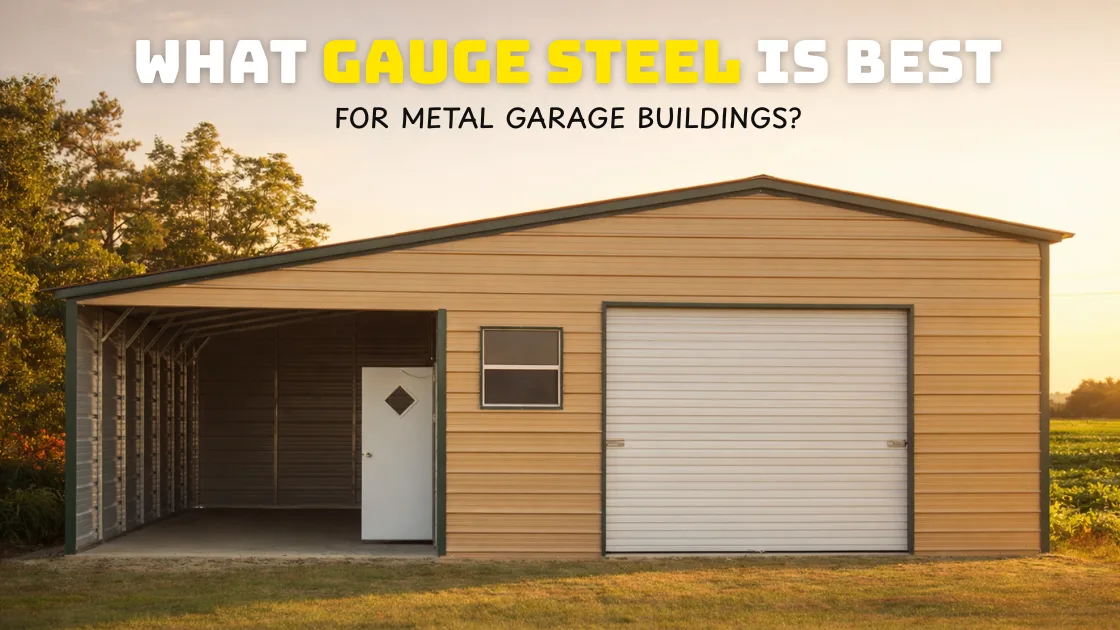
The best gauge steel for metal garage buildings depends on your durability needs and local weather conditions. 12-gauge steel is thicker, stronger, and ideal for heavy snow loads or high-wind regions. 14-gauge steel is the most widely used option for residential metal garages. For roofing panels, 26-gauge steel offers greater storm resistance while 29-gauge is standard for moderate climates.
Those four numbers,12, 14, 26, and 29, are the gauges you will encounter on every quote you get from metal garage suppliers. Understanding what each one means and where it performs best is key to building the right structure in the first attempt. It’s an effective way to have a strong and economical parking space.
In metal building construction, steel gauge is a standardized measurement of sheet metal thickness. The rule is counterintuitive: the lower the gauge number, the thicker and stronger the steel. A 12-gauge steel frame is thicker than a 14-gauge frame. At first, people think a lower number means lower thickness, but it’s just the opposite.
Gauge applies to two distinct parts of a metal garage building: the structural framing members (columns, beams, and purlins) and the exterior cladding panels (roof and walls). These two components almost always use different gauges, and for good reason, they serve different structural roles.
Why does gauge matter for durability? Thicker steel resists bending, denting, and deflection under load, whether that load is wind pressure, snow accumulation, or the weight of the structure itself. For steel garages in regions with harsh weather, choosing the right gauge is as important as the combined effects of anchoring and roof style. So, a building buyer can ensure a robust space that can withstand harsh weather by choosing the right gauge for the steel frame.
Also Read: Does a Metal Garage Building Increase Home Value? (2026 Data + Expert Insights)
Here is a straightforward reference for the four gauges you will encounter when specifying or quoting a metal garage. These are the industry-standard values for galvanized steel used in prefabricated metal buildings:
| Steel Gauge | Thickness (inches) | Thickness (mm) | Common Use | Strength Level |
| 12 Gauge | ~0.1046 in | ~2.66 mm | Frame / structural | Heavy-duty |
| 14 Gauge | ~0.0747 in | ~1.90 mm | Standard garage frame | Residential standard |
| 26 Gauge | ~0.0179 in | ~0.45 mm | Roofing/wall panels | Storm-resistant |
| 29 Gauge | ~0.0142 in | ~0.36 mm | Standard roofing panels | Light-duty roofing |
Note: 12 gauge steel thickness at ~0.1046 inches is roughly 40% thicker than 14 gauge steel thickness at ~0.0747 inches, a meaningful structural difference when you are dealing with long clear spans or extreme weather loads.
You might have come across this question many times. There is no one-word answer. It depends entirely on what your structure needs to handle. Here is a direct side-by-side comparison between 12 gauge or 14 gauge so you can find out which gauge steel structure you need.
| Feature | 12 Gauge | 14 Gauge |
| Thickness | ~0.1046 in (thicker) | ~0.0747 in (standard) |
| Wind rating | Higher — suits hurricane & high-wind zones | Standard — suits moderate climates |
| Snow load capacity | Heavy load rated | Moderate load rated |
| Best use | Commercial, large-span, extreme weather | Residential, car storage, mild climates |
| Weight | Heavier — requires more robust anchoring | Lighter — standard anchoring sufficient |
| Lifespan (avg.) | 30–50 years with proper maintenance | 20–40 years with proper maintenance |
12-gauge framing uses thicker steel throughout every column and beam, which translates directly to higher load ratings and longer structural warranties. It is the preferred specification for:
14-gauge is the most widely installed framing gauge across the residential metal garage market, and for most buyers in moderate climates, it is entirely sufficient. It suits:
Roof panels on metal garage buildings use thinner steel than the frame. This is why typically, 26 or 29 gauge is used for the roof. These panels are not load-bearing in the same way as framing members; their job is to shed water, reflect heat, and resist wind uplift. The choice between 26 gauge or 29 gauge roofing is a real one worth understanding.
At ~0.0179 inches thick, 26-gauge roofing panels are the stronger option. They resist denting from hail and debris, handle wind uplift forces more effectively, and are the correct choice for any custom metal garage in a storm-prone region. Most manufacturers rate 26-gauge roofing for significantly higher wind speeds than 29-gauge. If you’re in a coastal, tornado-corridor, or heavy-snowfall area, specify 26 gauge on your roof.
At ~0.0142 inches thick, 29-gauge is the standard panel for prefab metal garages in moderate climates. It is lighter, which reduces total structure weight slightly, and performs reliably under normal seasonal conditions. For a residential garage in a region without extreme weather events, 29-gauge roofing is a well-proven choice used successfully across millions of installed structures.
You Might Like: Do Metal Garages Need Concrete Foundations? What Every Buyer Should Know
Three factors drive the right gauge decision for any metal garage building:
This is the most important variable. If you are building in a FEMA-designated high-wind zone, a region with 30+ inches of annual snowfall, or a hurricane-exposed coastal area, 12-gauge framing and 26-gauge roofing are the specifications to start from. Moderate climates — where neither snow nor wind routinely tests structural limits — are well-served by 14-gauge framing and 29-gauge roofing.
Larger structures accumulate more load across longer spans. A 12×20 ft steel garage can perform reliably with 14-gauge framing because the spans are short and loads are modest. A 40×60 ft commercial structure, by contrast, puts real stress on every column and beam — 12-gauge framing is the appropriate starting point at that scale. As a rule, the wider the clear span, the more the gauge matters.
A residential metal garage used for car storage has different requirements than a commercial workshop running heavy equipment. Residential and hobby use is well-matched to 14-gauge framing. Any application involving mounted hoists, overhead crane rails, heavy floor loads, or large commercial vehicles warrants 12-gauge framing as a minimum specification.
Specify 12-gauge framing when one or more of the following applies to your project:
Many metal garage dealers will automatically recommend 12-gauge for any structure in a recognized high-hazard zone. If yours does not raise the subject, ask directly; it is a specification that can make a significant difference in long-term performance.
14-gauge framing is a durable, well-proven specification for the majority of residential metal garages installed across the country. It is the right choice when:
The overwhelming majority of prefab metal garages installed for residential buyers across the United States use 14-gauge framing, and they perform reliably for decades when properly anchored and maintained. Do not over-specify if your use case and climate do not require it.
Not true for every application. 12-gauge framing delivers higher load ratings than many residential builds actually need. Specifying 12-gauge for a small residential metal garage in a mild climate adds structural margin without adding functional benefit. Match the gauge to your actual conditions and use.
These are entirely separate specifications. A building can have 14-gauge framing and 26-gauge roofing, and that combination is often the right call in moderate climates where the frame meets code but weather resistance on the roof is still a priority. Always ask your metal garage dealer to quote both frame and panel gauges separately.
The opposite is true. Gauge numbers work inversely; 12 is thicker and stronger than 14, which is thicker and stronger than 26 and 29. This trips up many first-time buyers. When comparing quotes, always look at the actual thickness in inches or millimeters alongside the gauge number to make a true apples-to-apples comparison.
They do not. Most manufacturers offer longer structural warranties on 12-gauge framing than on 14-gauge, some by as much as 10–20 years. If warranty length matters to your purchasing decision, always ask which gauge qualifies for the extended coverage tier.
Use this table as a starting reference when scoping your custom metal garage project. Adjust upward for extreme weather regions.
| Garage Size | Recommended Frame Gauge | Roof Panel Gauge | Notes |
| Up to 20×20 ft | 14 Gauge | 29 Gauge | Standard residential use |
| 20×30 ft – 20×40 ft | 14 Gauge | 26 Gauge | Upgrade roof in snow/wind zones |
| 24×30 ft – 30×40 ft | 12 or 14 Gauge | 26 Gauge | Workshop, multi-vehicle storage |
| 40×60 ft and larger | 12 Gauge | 26 Gauge | Commercial / farm structures |
Gauge directly affects how long a metal garage building performs before requiring repairs or replacement. Here is how the relationship plays out in practice:
The most important longevity factor beyond gauge is the quality of the galvanized coating. A thicker steel panel with a thin coating will rust faster than a lighter panel with a premium Galvalume or zinc-aluminum finish. When evaluating steel garages, ask about coating thickness and warranty alongside gauge specification.
Yes, and it matters more than most buyers realize. Structural frame warranties on metal garage buildings are typically tied directly to gauge specification. However, the warranties depend on the dealer you are buying the garage from. The standard warranty breakdown looks like this:
If you are working with a metal garage dealer and comparing quotes, ask each one to provide the specific warranty document tied to the gauge they are quoting. Warranty terms vary significantly between manufacturers, and a longer-warranted structure often signals better material quality overall.
Also Read: Ultimate Metal Garage FAQ Guide (2026 Cost, Permits & Sizes Explained)
Steel gauge is one of the most consequential specifications in any metal garage building project, and it is also one of the most misunderstood. Here is the summary:
The right combination depends on your climate, building size, intended use, and warranty expectations. A knowledgeable metal garage dealer should walk you through each gauge option transparently, explaining exactly what load ratings apply, what warranty each specification carries, and why a given combination suits your project. If a dealer cannot answer those questions directly, find one who can.
Expand each item below to explore a few helpful answers before moving to the next blog post.
Yes. 12-gauge steel is approximately 40% thicker than 14-gauge and carries higher wind and snow load ratings. It is the heavier-duty specification and is standard for commercial-grade metal garage buildings and structures in extreme weather regions.
Most prefab metal garages use 14-gauge framing for the structural frame and 29-gauge panels for standard roofing. Buyers in high-wind or heavy-snow regions should specify 12-gauge framing and 26-gauge roofing when placing their order.
In most cases, yes, when the application justifies it. If your climate, garage size, or intended use meets any of the criteria outlined in the 12-gauge section of this guide, the longer warranty coverage, better load performance, and higher resale value make 12-gauge framing a sound investment. For a small residential steel garage in a mild climate, 14-gauge framing is entirely appropriate and cost-effective.
12-gauge framing paired with 26-gauge roofing panels is the correct specification for high-wind zones. Many local building codes in hurricane-exposed or tornado-corridor regions will require higher wind-load ratings that only 12-gauge frames can certify. Always verify your local wind-speed design requirement before specifying.
12-gauge framing with 26-gauge roofing will outlast lighter specifications in demanding environments. However, all gauges can achieve a long service life when the galvanized coating quality is high, the structure is properly anchored, and basic maintenance, including periodic fastener inspection, is performed.
Not directly. Panel gauge affects how resistant the cladding is to denting and surface damage, which can affect long-term appearance. A 26-gauge panel will hold its shape and finish longer under hail, debris, and UV exposure than a 29-gauge panel, but from a new installation standpoint, both look identical.
Last Call for Summer Savings! Get Up To 30% Off |View Offer >>
Last Call for Summer Savings! Get Up To 30% Off |View Offer >>
Last Call for Summer Savings! Get Up To 30% Off |View Offer >>
Last Call for Summer Savings! Get Up To 30% Off |View Offer >>
Last Call for Summer Savings! Get Up To 30% Off |View Offer >>
Last Call for Summer Savings! Get Up To 30% Off |View Offer >>
Last Call for Summer Savings! Get Up To 30% Off |View Offer >>
Last Call for Summer Savings! Get Up To 30% Off |View Offer >>
Last Call for Summer Savings! Get Up To 30% Off |View Offer >>
Last Call for Summer Savings! Get Up To 30% Off |View Offer >>
Last Call for Summer Savings! Get Up To 30% Off |View Offer >>
Last Call for Summer Savings! Get Up To 30% Off |View Offer >>
Last Call for Summer Savings! Get Up To 30% Off |View Offer >>
Last Call for Summer Savings! Get Up To 30% Off |View Offer >>