2 car garage
October 12, 2026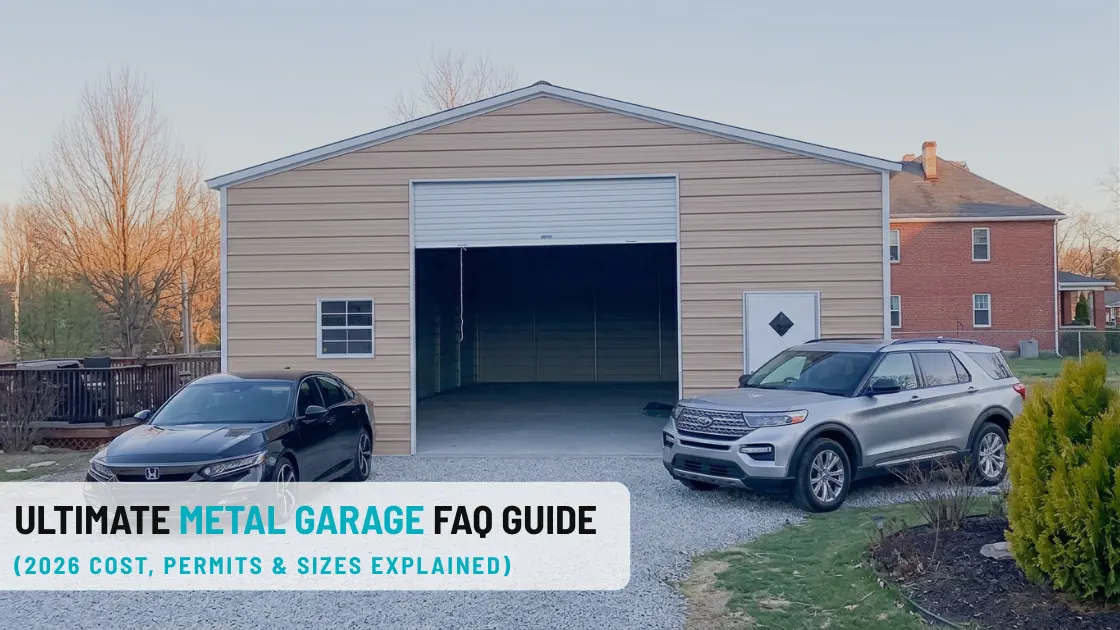
Buying a metal garage in 2026 involves more than just choosing a size. Buyers want to understand pricing, permits, wind ratings, customization options, and long-term durability before making a decision.
With rising steel prices and stricter local building codes across the U.S., it’s important to make an informed choice. This guide answers the most common questions homeowners ask – clearly, directly, and without confusion.
Metal Garage Quick Facts (2026)
Modern metal garages are pre-engineered steel structures built for durability, weather resistance, and long-term performance. Unlike traditional wood garages, they resist termites, rot, and structural warping.
Most garages meet certification standards, making them suitable for high-wind and snow-prone regions.
Before ordering, consider:
Pre-built garages are built using galvanized steel framing and sheet panels designed to resist rust, pests, and structural warping. Unlike wooden garages, they don’t crack, rot, or attract termites. Their sizes range from small 18-wide garage buildings to 50-wide buildings. So you can have a single-car unit to large multi-vehicle parking garages. Most custom prefab garages are pre-engineered in sections and assembled on-site, which makes installation much faster than traditional construction.
Steel prices have increased due to supply chain shifts and higher manufacturing costs. As a result, base pricing for metal garages has adjusted in recent years.
2026 Average Pricing Examples:
| Garage Size | Estimated Starting Price |
|---|---|
| 20×20 | $5,000–$6,500 |
| 24×30 | $8,000–$13,000 |
| 30×40 | $14,000+ |
Even with price adjustments, steel garages remain more cost-effective long term due to lower maintenance compared to wood structures.
Modern metal garages are highly customizable. Buyers can select:
This flexibility allows you to design a garage that fits your climate, usage, and budget rather than settling for a one-size-fits-all model.
Most U.S. counties require a building permit for garages larger than 120–200 sq. ft.
Before installation, confirm:
Foundation Requirements:
Installation Timeline:
Proper preparation prevents fines or removal penalties.
If you are also planning to buy a metal garage, let’s move into the most common questions homeowners ask about these steel structures, so you can make an informed decision.

Whether you’re considering prefab garages for your backyard or larger parking garages for multiple vehicles, clear answers help you plan better. Below are the most common questions U.S. homeowners ask in 2026.
In 2026, most steel garages cost between $4,500 and $20,000, depending on size, roof style, and upgrades.
Cost depends on:
Garage pricing depends on size, steel thickness, roof style, doors, insulation, and wind/snow certification. For example, upgrading from 14-gauge to 12-gauge steel garage can increase cost by 8-15%. And if you add a vertical roof and two roll-up doors, it can further increase the total investment.
Yes, custom garages often increase resale value when properly permitted and installed on a concrete slab. A 24×30 garage adds 720 sq. ft. of usable space, which buyers value for storage or workshop use. And permanent custom garages improve curb appeal more than temporary carports. Here is a complete view of how a garage can increase your property value.
Metal garages typically last 30–50 years with proper maintenance.
Galvanized steel resists rust, and vertical roof systems improve water drainage. Annual inspections help extend lifespan by preventing loose fasteners and panel wear.
Yes, most cities and counties require a permit for metal garages over 120–200 sq. ft.
Local codes may require:
Always check with your local building department before ordering.
For residential pre-built garages, 14-gauge framing is standard. However, 12-gauge steel is stronger and better for high-wind zones or heavy snow regions. Because thicker framing reduces flexing under load. Roof panels usually use 26-29 gauge sheet metal.
Yes, metal parking garages perform very well in snow-heavy states when engineered correctly. Choose a building rated for a 40-70 PSF snow load. A vertical roof allows snow to slide off, reducing structural stress compared to regular roof styles.
Certified metal garages can handle winds from 120 mph up to 170 mph, depending on engineering. Anchor systems and reinforced frames increase stability. In hurricane-prone states like Florida, wind-rated parking garages are essential for safety compliance.
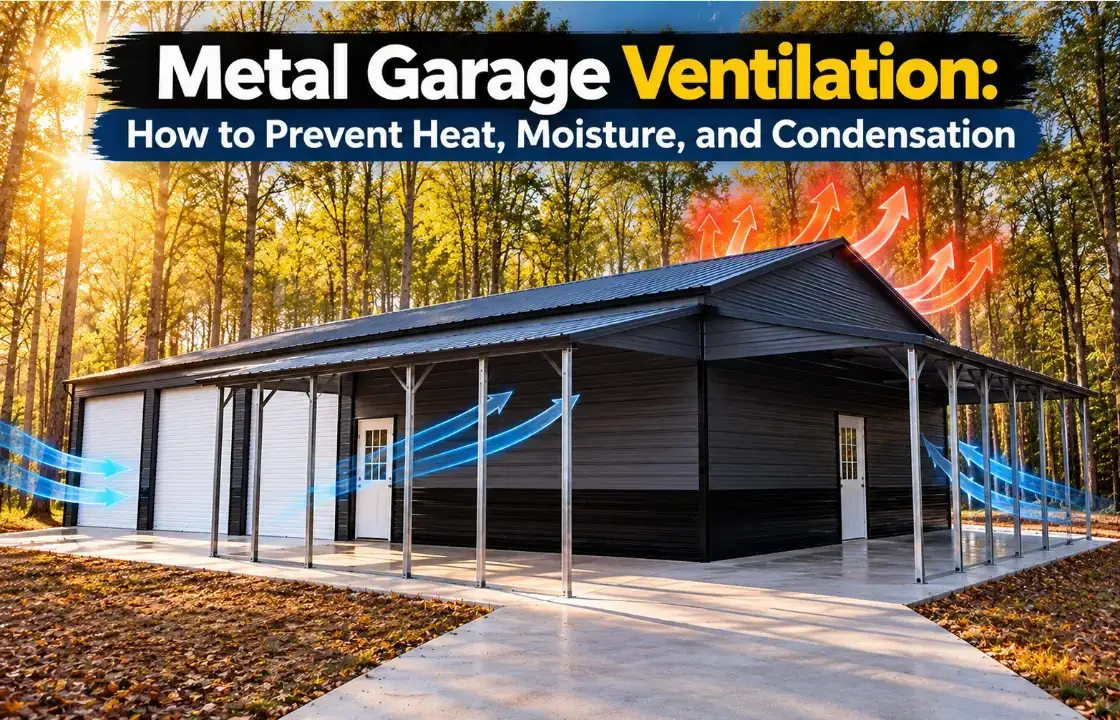
Prefabricated garage sweating happens when warm air meets a cold metal surface. Installing insulation with a vapor barrier reduces moisture buildup. Ridge vents and side vents improve airflow. Controlling humidity inside the garage is key to preventing condensation.
To stop condensation on a metal garage roof, install reflective insulation or spray foam under the roof panels. Proper ventilation prevents trapped moisture. A vertical roof system also helps by reducing areas where water can accumulate internally.
A concrete slab foundation is the most stable option for metal garages.
Gravel pads may work for smaller structures but offer less long-term stability.
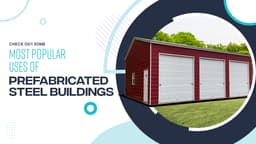
Most garages are installed in 1–3 days once the site is level and ready. Larger 30×50 garages may take 3–5 days. Keep in mind that concrete slab curing usually requires 5–7 days before building installation begins. After installation, you can also use metal garages for innovative purposes apart from just parking vehicles.
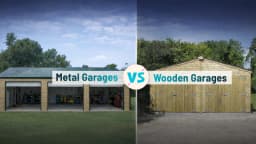
Yes, steel garages are typically 20–30% more cost-effective than wooden garages of similar size. Wood requires more labor and ongoing maintenance, like termite treatment and repainting. Metal garages offer lower long-term upkeep costs, which makes steel buildings a more economical option.
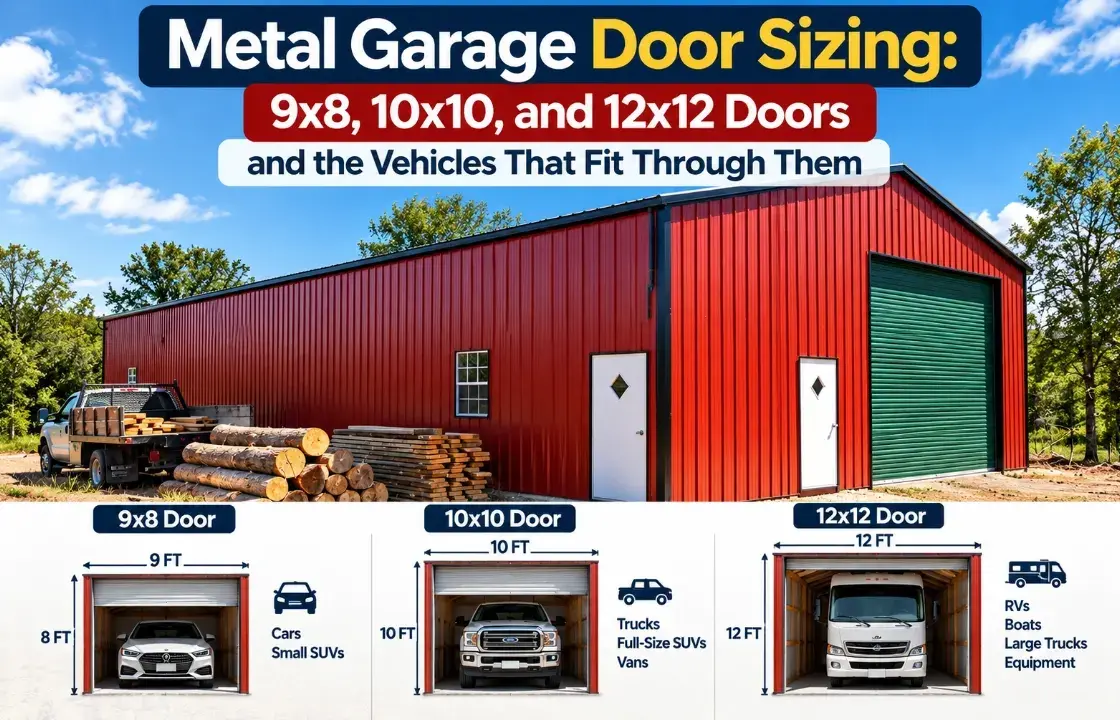
Yes, you can customize the roof style, color, doors, windows, height, insulation, and more to create a tailored building. For example, you can design a 24×35 garage with two 10×10 roll-up doors and one walk-in door. Since custom garages offer strong flexibility in layout design, such installation is possible. However, you need a professional steel building dealer to install a garage.
Vertical roof style is usually the best option. It improves drainage, reduces snow buildup, and increases durability. Regular roofs are more cost-effective but less efficient in areas with heavy rain or snow. A-frame horizontal roofs offer a balanced option.
Yes, you can insulate a parking garage using fiberglass batts, spray foam, or rigid board insulation. An R-13 wall and R-19 roof setup works well in moderate climates. Moreover, you can use single-bubble, double-bubble, and woven R-17 insulation as needed. Insulation improves comfort and reduces condensation issues. But take your time and find the most suitable insulation type for your prefab garage.
It depends on vehicle count and your storage needs. A 20×20 garage fits two compact cars. A 24×30 provides extra storage space. For trucks, boats, or RVs, consider 24×40 or 30×50 with 12-14 ft sidewalls.
Yes, many suppliers offer financing with monthly payment plans. Approval depends on credit score and down payment. Financing allows buyers to afford larger metal garages without paying the full amount upfront.
Before ordering, confirm permit requirements, measure site space, check property setbacks, prepare level ground, and choose foundation type. Also, verify wind and snow ratings for your state. Because proper preparation prevents costly delays.
Use a chemical paint stripper safe for metal or sand with 120-150 grit sandpaper. After removing old paint, apply a rust-inhibiting primer before repainting. Proper surface preparation ensures long-lasting results.
Before finalizing your purchase, it’s helpful to visualize your structure’s size, layout, and upgrades. That’s why we offer a powerful 3D estimator tool that allows you to explore dimensions, roof styles, door placements, and pricing in real time.
Fall Into Savings! Up To 30% Off |View Offer >>
Fall Into Savings! Up To 30% Off |View Offer >>
Fall Into Savings! Up To 30% Off |View Offer >>
Fall Into Savings! Up To 30% Off |View Offer >>
Fall Into Savings! Up To 30% Off |View Offer >>
Fall Into Savings! Up To 30% Off |View Offer >>
Fall Into Savings! Up To 30% Off |View Offer >>
Fall Into Savings! Up To 30% Off |View Offer >>
Fall Into Savings! Up To 30% Off |View Offer >>
Fall Into Savings! Up To 30% Off |View Offer >>
Fall Into Savings! Up To 30% Off |View Offer >>
Fall Into Savings! Up To 30% Off |View Offer >>
Fall Into Savings! Up To 30% Off |View Offer >>
Fall Into Savings! Up To 30% Off |View Offer >>