2 car garage
November 23, 2026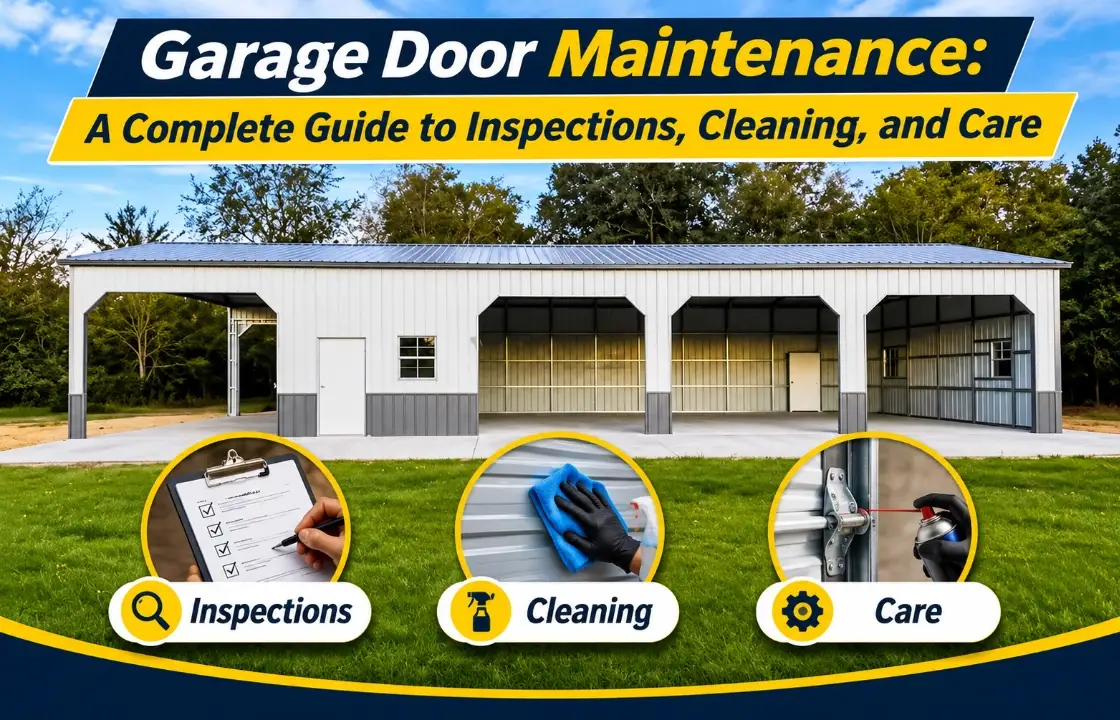
Your garage door is one of the most frequently used moving parts of your property. It opens before you leave for work, closes when you return, and protects vehicles, tools, equipment, and other belongings in between. With repeated use, its rollers, hinges, tracks, springs, cables, seals, and opener are exposed to wear.
A consistent garage door maintenance routine helps you notice visible damage, keep the door’s exterior clean, and identify operating changes before they become bigger problems. It is especially important for a metal garage, where the steel panels and protective finish should also be checked for scratches, moisture, and corrosion. If you are comparing building options, explore VMG’s metal garage options to see available configurations.
The good news is that several basic checks can be completed by a property owner. However, parts that operate under high tension—particularly springs, lift cables, and bottom brackets—should be handled only by a qualified garage door technician. This guide explains what to inspect, how to care for the door, and when professional service is the safer choice.
Start with a visual inspection of the complete door system. With the door closed, look at the panels from inside and outside, then check the visible hardware without loosening or removing any components.
| Garage door component | What to look for | Practical next step |
| Door panels and finish | Dents, scratches, peeling coating, rust, or moisture marks | Clean the surface and follow the manufacturer’s guidance for finish repairs |
| Tracks | Loose debris, visible bends, or signs that rollers are rubbing | Remove loose dirt from accessible areas; have damaged tracks inspected |
| Rollers and hinges | Cracks, wobbling, visible wear, or unusual movement | Arrange service if a component appears damaged |
| Springs and lift cables | Gaps, fraying, corrosion, deformation, or a hanging cable | Do not touch; stop using the door if damage is visible and call a technician |
| Weather stripping | Cracks, gaps, hardening, or sections pulling away | Replace worn seals with compatible parts |
| Safety sensors | Dirty lenses, blocked beam, or failed safety test | Clean lenses and test according to the opener manual |
| Garage door opener | Unusual noise, inconsistent response, or warning indicators | Check the manual and arrange service if the issue continues |
This checklist is for observation and basic care. It is not a direction to adjust the door’s spring system, cable tension, track alignment, or opener force settings.
Look for visible changes such as a damaged panel, loose-looking hardware, rust, a frayed cable, or a roller that appears out of position. Pay attention to changes in how the door moves. If it becomes uneven, jerky, unusually heavy, or noisy, stop and arrange an inspection rather than trying to force it through a cycle.
Dust, leaves, and small objects can collect around the vertical and horizontal tracks. With the door safely closed, remove loose debris from accessible track surfaces using a soft brush or cloth. Do not hammer a track back into position, bend it, or apply grease along the track unless the manufacturer specifically instructs you to do so.
Garage door lubrication can reduce friction at approved moving points. The correct locations and product depend on the door and roller design. Check the manufacturer’s manual before applying lubricant to hinges, roller bearings, springs, or other designated points. Use only a suitable garage-door product, apply it sparingly, and wipe away excess. Some nylon rollers do not require lubrication.
The bottom seal and perimeter weather stripping help limit the entry of rain, dust, insects, and outside air. Look for cracks, gaps, hardened rubber, or seals that have pulled away. Replace worn seals with parts designed for the door model, and make sure the door closes evenly after replacement.
For routine metal garage door maintenance, remove loose dirt and wash the panels with mild soap and water using a soft cloth or sponge. Rinse away residue and dry the surface. Avoid abrasive pads and harsh cleaners that may damage the finish. Inspect scratches and exposed metal, then follow the manufacturer’s coating and touch-up instructions to address damage. For more on managing heat and condensation inside a steel structure, read VMG’s guide to insulated metal garages.
Rollers and hinges guide the door through its travel path. Watch for cracked rollers, wobbling, bent hinges, or unusual movement while the door operates. Do not remove rollers or hinges yourself, especially when they are connected to a loaded door section. Ask a technician to replace damaged hardware.
Automatic openers commonly use photoelectric sensors and an auto-reverse function. Keep sensor lenses clean and make sure the beam path is clear. Test both systems only by following the opener manufacturer’s procedure. If the door does not respond as specified, discontinue automatic operation until the problem has been corrected. Never put your hands, feet, or body under a moving door to test it.
Squeaking, grinding, rattling, or a sudden bang can signal a change in the door system. Noise alone does not identify the failed component, so avoid guessing that lubrication will solve it. If the door starts moving unevenly, a cable appears damaged, or a spring looks broken, keep clear and contact a qualified technician.
Notice whether the opener responds consistently to the wall control and remote. Check the remote battery and consult the manual for indicator lights, routine checks, and backup-battery requirements. Do not open electrical housings or attempt wiring repairs unless you are qualified to do so.
A technician can inspect spring condition and balance, cables, drums, rollers, hinges, bearings, tracks, opener operation, and safety systems. Professional attention is particularly important when the door is heavy, crooked, off track, repeatedly reverses, or shows visible spring or cable damage.
The right garage door maintenance schedule depends on the door model, how often it is used, local weather, and the manufacturer’s instructions. Use the routine below as a homeowner planning guide—not as a replacement for the maintenance schedule supplied with your door or opener.
| When | What to check |
| Monthly | Look over the door and visible hardware, listen for changes during operation, and test safety features as directed by the opener manual. |
| Every few months | Review the panels, visible rollers and hinges, weather seals, and accessible track areas for dirt or damage. |
| At least seasonally | Clean the exterior panels and check for scratches, peeling finish, rust, or water intrusion. |
| After severe weather | Look for impact damage, loose components, damaged seals, or signs that the door no longer operates normally. |
| As recommended by the manufacturer | Arrange professional servicing and complete any specified lubrication, adjustment, or component checks. |
A monthly visual and safety check is a useful habit, but the manufacturer’s instructions take priority. Do not perform a manual balance test or disconnect the opener unless the manufacturer specifically describes a safe procedure for your door.
Coastal properties and locations exposed to road salt or persistent humidity may need closer attention to cleaning and finish condition. Follow the coating manufacturer’s care recommendations for the specific steel panels. If your property is in a high-wind region, review VMG’s guide to hurricane garage doors and wind-rated protection for additional storm-readiness considerations.
| What you notice | Possible causes | Recommended response |
| Door will not open | Power, opener, spring, or mechanical problem | Check power and the owner’s manual; call a technician if unresolved |
| Door moves unevenly | Track, roller, cable, or spring-system issue | Stop operating and arrange a professional inspection |
| Grinding or repeated rattling | Worn or damaged hardware, loose components, or track contact | Do not guess at the cause; have the system inspected |
| Remote does not respond | Battery, programming, or opener issue | Check the battery and follow the manual |
| Door reverses unexpectedly | Sensor obstruction, safety-system issue, or detected resistance | Check for visible obstructions and follow the safety test procedure |
| Rust or peeling finish | Coating damage or prolonged moisture exposure | Clean and address the finish according to manufacturer instructions |
| Door suddenly feels heavy | Possible spring or counterbalance problem | Stop using the door and contact a qualified technician |
These symptoms are not definitive diagnoses. A garage door is heavy and can move unexpectedly when a spring, cable, or other supporting component fails. Do not continue operating a visibly damaged or off-track door.
Homeowners can take care of basic cleaning and visual checks. Repairs involving high-tension components or structural alignment are different and should be left to trained professionals.
| Task | Who should handle it? |
| Cleaning exterior panels with mild soap and water | Homeowner |
| Removing loose debris from accessible track surfaces | Homeowner |
| Inspecting weather stripping and visible finish damage | Homeowner |
| Checking remote batteries and reading opener indicators | Homeowner |
| Testing safety features using the manufacturer’s procedure | Homeowner, following the manual |
| Adjusting or replacing springs and lift cables | Qualified garage door technician |
| Repairing a door that has come off its track | Qualified garage door technician |
| Changing spring tension, bottom brackets, or cable drums | Qualified garage door technician |
| Electrical repairs inside the opener | Qualified professional |
Garage door springs and cables are under substantial tension. Never loosen, remove, or adjust them yourself. Keep people away from a damaged door and arrange professional service.
A repair may make sense when the problem is limited to a replaceable component and the door panels, frame, and supporting structure remain in serviceable condition. A technician can identify the failed part and explain whether repair is appropriate.
Replacement may be worth considering when several panels are badly damaged, corrosion has affected structural areas, repeated failures are occurring, or the existing door no longer suits the building’s use. Compare the condition of the door, repair requirements, safety, and replacement cost before deciding.
A dependable garage door starts with simple habits: look for visible damage, keep exterior panels clean, check the weather seals, and pay attention to changes in how the door operates. A regular inspection can help you spot developing issues, while manufacturer guidance helps you avoid maintenance that could damage the door or opener.
For metal garage owners, protecting the steel finish is just as important as keeping the door hardware in good condition. Clean the panels carefully, address coating damage using the correct products, and arrange professional help whenever a mechanical or safety issue appears.
Expand each item below to explore a few helpful answers before moving to the next blog post.
Make a basic visual inspection monthly and test safety features according to the opener manual. Follow the door manufacturer's schedule for lubrication and professional servicing.
Check the panels, visible hardware, tracks, rollers, hinges, weather seals, opener, and safety sensors. Look for corrosion, wear, unusual movement, and new noises. Do not adjust springs or cables.
Use only a lubricant recommended by the door manufacturer. The correct product and lubrication points depend on the hardware and roller type. Do not coat tracks or nylon rollers unless the manual says to.
Wash the panels with mild soap and water, dry them, and inspect the protective finish for scratches, peeling, and rust. Follow the manufacturer's instructions for touch-up products and coating repairs.
Squeaking can come from friction or worn moving components, but the sound alone does not identify the cause. Check the manual for approved lubrication points and arrange service if the noise persists or operation changes.
No. Garage door springs store significant energy and can cause serious injury. Spring inspection, adjustment, and replacement should be performed by a qualified garage door technician.
The safety sensors may be blocked or misaligned, the opener may detect resistance, or another safety-system issue may be present. Check for visible obstructions and follow the opener manual. Arrange service if the issue continues.
Keep the surface clean, remove accumulated moisture, and inspect the protective finish. Address scratches or exposed metal using the coating manufacturer's recommended preparation and touch-up process.
Call when the door is crooked, unusually heavy, off track, repeatedly reverses, makes a sudden loud bang, or has a visibly damaged spring or cable. Keep clear of the door if a supporting component appears damaged.
Routine care can help reduce avoidable wear and identify problems earlier. Actual service life depends on materials, installation, usage, climate, and the condition of the door's components.
BLACK FRIDAY & CYBER MONDAY SALE! UP TO 30% OFF |View Offer >>
BLACK FRIDAY & CYBER MONDAY SALE! UP TO 30% OFF |View Offer >>
BLACK FRIDAY & CYBER MONDAY SALE! UP TO 30% OFF |View Offer >>
BLACK FRIDAY & CYBER MONDAY SALE! UP TO 30% OFF |View Offer >>
BLACK FRIDAY & CYBER MONDAY SALE! UP TO 30% OFF |View Offer >>
BLACK FRIDAY & CYBER MONDAY SALE! UP TO 30% OFF |View Offer >>
BLACK FRIDAY & CYBER MONDAY SALE! UP TO 30% OFF |View Offer >>
BLACK FRIDAY & CYBER MONDAY SALE! UP TO 30% OFF |View Offer >>
BLACK FRIDAY & CYBER MONDAY SALE! UP TO 30% OFF |View Offer >>
BLACK FRIDAY & CYBER MONDAY SALE! UP TO 30% OFF |View Offer >>
BLACK FRIDAY & CYBER MONDAY SALE! UP TO 30% OFF |View Offer >>
BLACK FRIDAY & CYBER MONDAY SALE! UP TO 30% OFF |View Offer >>
BLACK FRIDAY & CYBER MONDAY SALE! UP TO 30% OFF |View Offer >>
BLACK FRIDAY & CYBER MONDAY SALE! UP TO 30% OFF |View Offer >>