2 car garage
November 12, 2026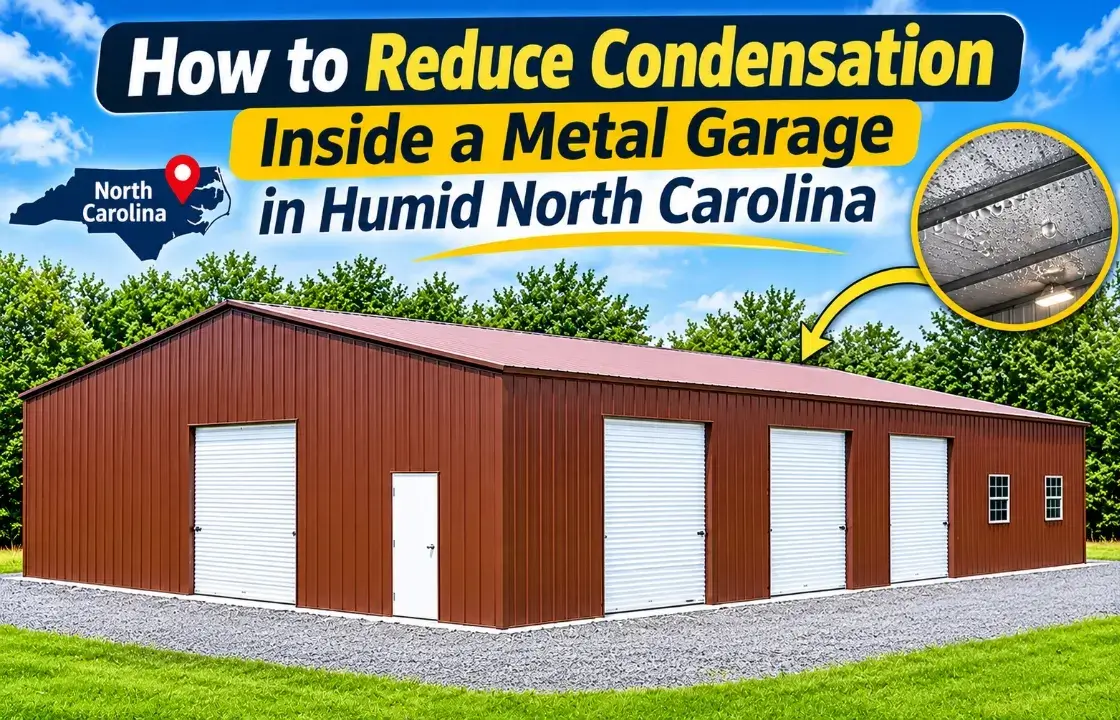
Finding water droplets on your garage roof, damp tools, or rust spots on metal surfaces can be frustrating. These problems often occur when warm, moisture-filled air meets cooler metal panels. In humid North Carolina, changing temperatures and moisture in the air can make the issue more noticeable. A good metal garage condensation prevention plan can help protect your vehicles, equipment, and stored belongings.
Whether you own a workshop in Charlotte, a storage garage in Raleigh, or a coastal garage near Wilmington, controlling moisture requires more than simply opening the garage door. Let’s look at what causes condensation and how to manage it effectively.
Condensation forms when moist air touches a surface that is colder than the air’s dew point. The water vapor changes into liquid droplets, which can collect on the roof, walls, fasteners, and stored items.
North Carolina’s climate makes moisture control in steel garages particularly important. The state has hot, humid summers, but conditions vary across its three main regions:
The North Carolina Climate Science Report confirms these regional differences and describes the state’s generally humid climate. A metal roof can cool during the night and warm during the day; thus, best practices are needed to stop roof condensation. This is why you need to focus on metal garage condensation prevention before installation.
When humid air reaches a sufficiently cool surface, condensation can develop. Poor airflow, wet vehicles, ground moisture, and inadequate insulation can make the problem worse.
Controlling moisture inside your metal garage requires a combination of insulation, proper airflow, and regular maintenance. The following six methods can help reduce moisture buildup, limit condensation, and protect your vehicles, tools, and stored equipment from damage.
Insulation helps reduce temperature differences between the metal panels and the garage interior. It can keep interior surfaces more stable and reduce the conditions that cause condensation.
However, choosing an insulation material is only part of the process. Its placement and moisture-control system matter just as much.
Common options include:
For a humid North Carolina garage, avoid installing insulation without considering how moisture will move through the complete wall and roof assembly. This is why insulated metal garages are a must; they work better in every weather condition.
When considering metal garage condensation prevention, don’t let moisture build up inside an enclosed garage. But simply installing one vent may not solve the problem. Air needs a clear entry point and a separate exit point.
Consider these options:
For example, a garage in Raleigh used for vehicle storage may benefit from appropriately positioned intake and high-level exhaust openings. A workshop with equipment that generates heat or fumes may need mechanical ventilation.
One important North Carolina consideration: Outdoor air is not always drier than indoor air. During muggy summer weather, opening every door and window can introduce more moisture. Ventilate when outdoor conditions are suitable, and consider controlled mechanical Metal building ventilation when necessary.
Condensation does not always originate from the roof or walls. Moisture can also enter from the ground and concrete slab. This is particularly important when a garage sits on poorly drained land or has no suitable moisture barrier beneath its foundation.
To reduce ground-related moisture:
If your garage is already built, inspect the slab and surrounding ground for persistent dampness. A floor coating may help in some situations, but it will not correct every source of moisture for better metal garage condensation prevention.
Wet vehicles, lawnmowers, garden tools, and outdoor equipment can introduce water into your garage. When several damp items remain inside a closed space, indoor humidity can increase.
A few simple habits can help:
If you regularly park a rain-soaked vehicle inside your steel garage in North Carolina, give the interior enough airflow to help moisture escape.
A dehumidifier can help when moisture continues to build up despite metal building ventilation and other preventive measures. It is particularly useful for enclosed garages that store sensitive equipment, tools, electronics, or materials that can be damaged by damp conditions.
Before purchasing one:
A portable dehumidifier may be useful in a smaller enclosed garage in Charlotte or Greensboro. Larger workshops may require equipment designed for greater moisture loads. Remember that a dehumidifier works best when the building is reasonably sealed and outdoor humid air is not continuously entering.
Sometimes what looks like condensation is actually water entering through a roof leak. Use the best ways to deal with roof condensation to avoid this issue in advance. Sometimes water leaks through loose fasteners or damaged seals. Treating the wrong problem will not fix the moisture issue.
Inspect the following areas:
Also look for rust around fasteners, discoloration, and water marks. If moisture appears in one specific area after rainfall, investigate possible leaks before assuming it is condensation. These common metal building insulation mistakes explain why incorrect installation and blocked ventilation can contribute to moisture problems.
Different garage conditions require different solutions. Use this quick comparison to identify where to start for effective metal garage condensation prevention.
| Garage condition | Recommended approach |
| Coastal garage near Wilmington | Moisture control in steel garages, suitable insulation, and humidity monitoring |
| Workshop in Charlotte or Raleigh | Planned ventilation, insulation, and source control |
| Garage with damp concrete | Check the slab, ground drainage, and moisture barrier |
| Garage with roof droplets | Inspect insulation, roof temperature, and airflow; ensure roof condensation is addressed |
| Closed garage with musty air | Check for leaks, measure humidity, and consider dehumidification |
For property owners planning a new structure, metal garages in North Carolina can help them when considering building configurations and climate-related requirements.
Even when garage owners invest in insulation or ventilation, certain mistakes can make moisture problems worse.
So, choose an all-weather metal garage because it considers insulation, ventilation, drainage, and other important features to deal with weather conditions. Use the best practices for moisture control in steel garages and try to avoid the above mistakes for best results.
Condensation control requires more than one quick fix. The right insulation system, suitable ventilation, proper drainage, and everyday moisture management all contribute to a healthier garage environment. For metal garage condensation prevention, start by identifying where the moisture comes from. Then choose solutions that suit your building, how you use it, and the local climate. A little planning can help protect your vehicles, tools, and stored belongings through North Carolina’s changing seasons.
Expand each item below to explore a few helpful answers before moving to the next blog post.
Coastal locations such as Wilmington generally experience more humid conditions because of their proximity to the Atlantic Ocean. However, actual condensation depends on indoor humidity, surface temperatures, insulation, and ventilation. A poorly ventilated garage in Charlotte can also develop serious moisture problems.
You can, but persistent humidity and condensation may increase the risk of rust and damage to interior materials. Consider moisture monitoring, suitable ventilation, and insulation if the garage experiences recurring dampness.
Not all day. Opening doors can improve airflow, but outdoor air may contain substantial moisture during humid weather. Check outdoor conditions and avoid introducing very humid air into a cooled garage.
Yes. Persistent moisture can contribute to corrosion on electrical components and damage sensitive equipment. Keep electrical installations protected and have recurring moisture issues inspected by a qualified professional.

Fall Into Savings! Up To 30% Off |View Offer >>
Fall Into Savings! Up To 30% Off |View Offer >>
Fall Into Savings! Up To 30% Off |View Offer >>
Fall Into Savings! Up To 30% Off |View Offer >>
Fall Into Savings! Up To 30% Off |View Offer >>
Fall Into Savings! Up To 30% Off |View Offer >>
Fall Into Savings! Up To 30% Off |View Offer >>
Fall Into Savings! Up To 30% Off |View Offer >>
Fall Into Savings! Up To 30% Off |View Offer >>
Fall Into Savings! Up To 30% Off |View Offer >>
Fall Into Savings! Up To 30% Off |View Offer >>
Fall Into Savings! Up To 30% Off |View Offer >>
Fall Into Savings! Up To 30% Off |View Offer >>
Fall Into Savings! Up To 30% Off |View Offer >>