2 car garage
September 30, 2026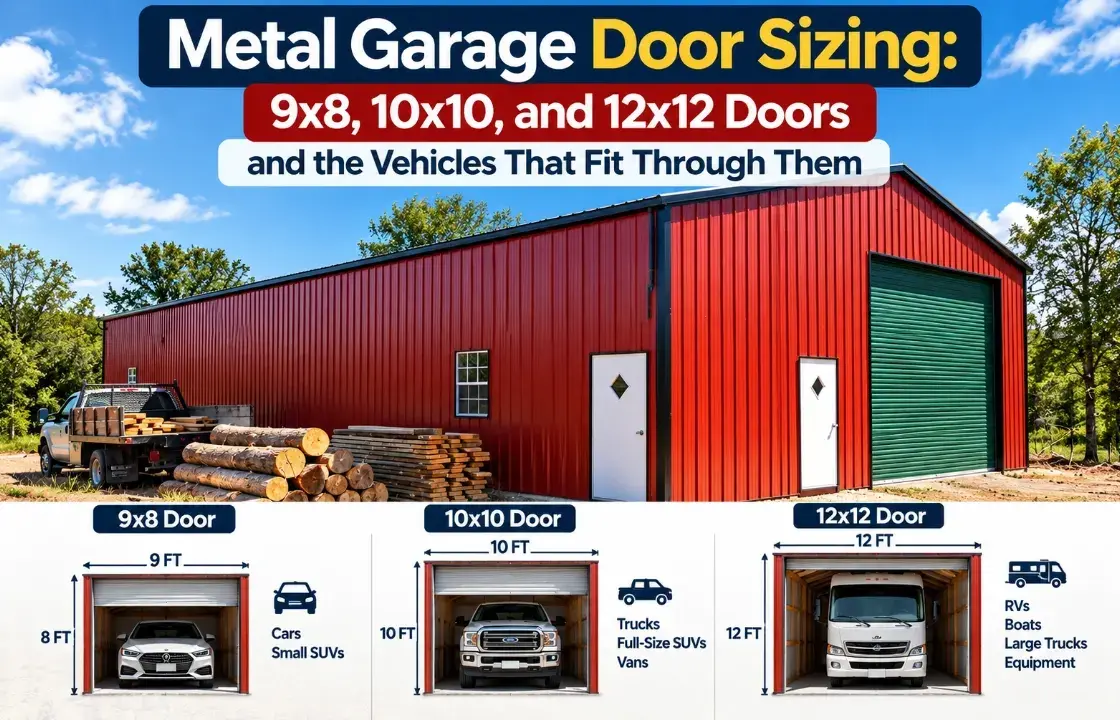
A garage door can look large on paper and still feel tight when you pull a full-size truck through it. Metal garage door sizing is not just about the opening itself. You also need to consider vehicle width, height, mirrors, roof accessories, parking angle, and the clearance needed around the vehicle.
A 9×8 door may work well for a car or crossover. A 10×10 opening gives larger pickups and SUVs more breathing room. A 12×12 door moves into oversized-vehicle territory. Here is how to choose between them.
A 9-foot-wide by 8-foot-tall garage door is a practical choice for many everyday vehicles. The extra foot of height compared with a common 7-foot residential door can also help when the vehicle has a roof rack or slightly greater overall height.
A 9×8 opening can generally work for:
The important word is many. Vehicle dimensions vary significantly between models, trims, mirrors, tires, and accessories.
For a typical passenger vehicle, the 9-foot width provides useful side clearance compared with narrower openings. However, it may feel less forgiving with a full-size pickup, especially if you regularly enter at an angle or have wide towing mirrors.
A 9×8 door is therefore a good starting point for a garage primarily used for everyday cars and moderate-size vehicles.
A 10×10 garage door provides both more width and more height. That extra space can make a noticeable difference if your garage is intended for full-size pickups, larger SUVs, work vans, or vehicles with roof-mounted equipment.
A 10×10 opening can be suitable for:
The additional width gives the driver more room to correct their approach and reduces the feeling of squeezing between the door jambs.
The 10-foot height is equally important. A vehicle does not have to be extremely tall for an 8-foot opening to become limiting. Roof racks, cargo boxes, antennas, lifted suspensions, and other accessories can increase overall vehicle height.
For example, a 10×10 opening is used on some existing metal garage configurations. One current 24×21×10 metal garage configuration uses two 10×8 roll-up doors, while larger structures can use 10×10 openings.
If you are still deciding how much overall building space you need, this guide to two-car garage dimensions can help you consider door size alongside the garage’s width and depth.
A 12×12 garage door is significantly larger than a typical residential opening. It is generally worth considering when the building needs to accommodate unusually tall or wide vehicles rather than ordinary passenger cars.
Potential uses include:
A 12×12 opening provides a large entry envelope, but that does not automatically mean every vehicle will fit comfortably. The vehicle’s actual width and height still need to be compared with the clear opening.
For example, a vehicle may technically fit through a 12-foot-wide door but still require careful maneuvering if the driveway is narrow or the approach is not straight. For oversized vehicles, the entire access route matters, not just the garage door.
| Garage Door Size | Typical Use | Vehicles That May Fit | Best For |
| 9×8 | Standard vehicle access | Cars, crossovers, SUVs, many pickups | Everyday vehicles |
| 10×10 | Larger vehicle access | Full-size trucks, SUVs, vans, some lifted vehicles | More clearance and flexibility |
| 12×12 | Oversized access | RVs, tall trucks, specialty and commercial vehicles | High-clearance applications |
These are planning categories, not guarantees. Always compare the actual vehicle dimensions with the manufacturer’s clear opening requirements.
One of the easiest mistakes in Metal Garage Door Sizing is assuming that a larger door automatically means you need a much larger garage. The door opening and the building dimensions serve different purposes. The door size determines how easily the vehicle can enter and exit. And the garage width determines how much space you have around the vehicle.
Moreover, garage depth determines whether the vehicle fits front to back and whether you have room for storage. The building height determines how much vertical clearance is available above the vehicle and whether equipment such as lifts can be installed.
For example, a 10×10 door may comfortably accommodate a large pickup, but a garage that is only slightly wider than the vehicle could still be frustrating to use.
If you want storage, a workbench, shelving, or multiple vehicles, plan the entire building around those requirements. A larger metal garage size guide can help put door dimensions into the context of overall building dimensions.
Do not choose a garage door based only on whether your vehicle is called a “truck,” “SUV,” or “car.” Measure the actual vehicle.
Record:
Then consider how you approach the door. A vehicle that is 7 feet wide does not necessarily need a 7-foot door. You need additional clearance on both sides for steering corrections and comfortable entry.
The same principle applies vertically. If your vehicle is close to the opening height, small changes in tire size, suspension, roof equipment, or loading can create a clearance problem.
The clear opening is only part of the measurement. Overhead garage doors also need space for tracks, springs, and operating hardware. Home Depot notes that standard systems can require around 10 to 12 inches of headroom, with additional clearance potentially needed for an opener. Clopay similarly specifies minimum headroom requirements that vary by spring system.
This matters when designing a new metal garage because increasing the door height does not simply mean making the framed opening taller. The roof structure, sidewall height, tracks, and available interior space all need to work together.
If you are considering a taller building, understanding vertical roof metal garages can also help when comparing different structural configurations.
For a two-vehicle garage, you have another decision: one wide door or two separate doors. A standard residential double door is often around 16 feet wide, while two individual doors can provide separate vehicle access. Home Depot and C.H.I. both identify 16×7 as a common double-door configuration.
Two doors can make sense when:
A single large opening may be more useful when you regularly move trailers, equipment, or unusually wide vehicles.
Use this simple decision process:
Choose 9×8 if the garage will mainly house cars, crossovers, midsize SUVs, or standard vehicles.
Consider 10×10 if you own full-size pickups, large SUVs, vans, roof-equipped vehicles, or want more comfortable clearance.
Consider 12×12 when the building needs to handle RVs, tall work vehicles, trailers, agricultural equipment, or other oversized vehicles.
Then check the entire building.
A garage designed around a large vehicle should provide enough width for maneuvering, enough depth for parking, sufficient wall height, and enough headroom for the door system.
For larger buildings, you may also want to consider 3-car garage dimensions before deciding whether one oversized opening or several smaller openings make more sense.
Mirrors, accessories, and driving angle all affect real-world clearance.
A large opening does not help much if the approach forces you to make a sharp turn.
Your current sedan may fit through a 9×8 opening, but a future full-size truck may be a different story.
The door opening needs to work with the roof structure, tracks, opener, and available headroom.
A 12×12 door needs a structure designed around it. Wall height, framing, roof design, and surrounding space all matter.
The right garage door is not simply the biggest one that fits your budget or building. It is the opening that gives your vehicle enough width, height, and maneuvering room without creating unnecessary structural requirements.
A 9×8 door works for many everyday vehicles. A 10×10 opening offers more flexibility for trucks and larger SUVs. A 12×12 door is better suited to oversized vehicles and equipment.
Start with your vehicle’s actual dimensions, then work outward to the door, garage layout, headroom, and building structure. That approach makes metal garage door sizing a practical design decision rather than a guess based on a standard chart.
Expand each item below to explore a few helpful answers before moving to the next blog post.
For many SUVs, yes. However, compare the vehicle's actual width and height with the clear door opening before deciding.
Many full-size trucks can fit through a 10×10 opening, but the exact vehicle dimensions, mirrors, tires, lift, and accessories matter.
A 12×12 opening is generally considered for tall or oversized vehicles such as RVs, large work trucks, trailers, and equipment.
Not automatically. A 10×10 door is better when you need the additional width or height. For a standard passenger vehicle, a 9×8 opening may provide enough clearance.
If you expect to own a larger vehicle later, planning additional clearance can prevent the need for structural changes later.