2 car garage
November 24, 2026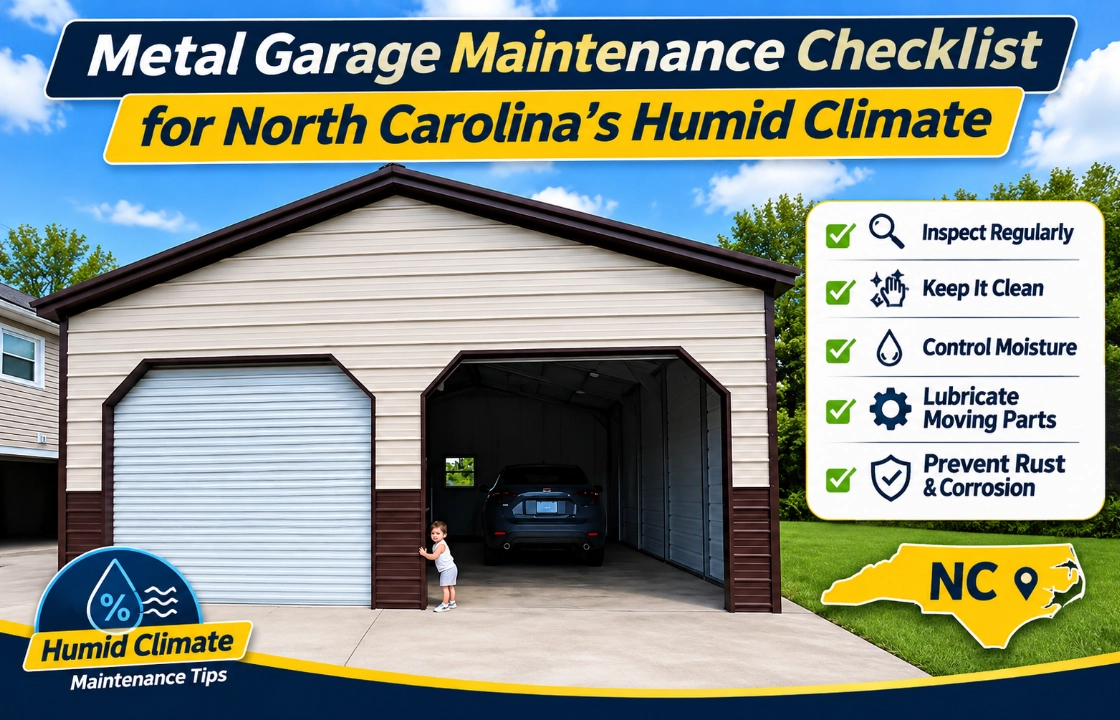
Owning a metal garage in North Carolina comes with specific maintenance needs. Hot, humid summers, frequent thunderstorms, heavy rainfall, and coastal weather can expose steel structures to moisture-related problems. Regular metal garage maintenance helps protect the roof, wall panels, fasteners, and foundation from damage.
However, maintenance needs can vary across the state. A garage in Wilmington may experience coastal moisture, while one in Raleigh or Charlotte faces different seasonal conditions. Mountain locations near Asheville can receive heavier rainfall and occasional winter weather.
This guide provides a practical, season-by-season metal garage maintenance checklist to help North Carolina property owners protect their garages throughout the year.
North Carolina has three major geographic regions: the Coastal Plain, Piedmont, and Appalachian Mountains. Each experiences different weather patterns.
These conditions can create several maintenance concerns:
Understanding these risks helps you plan maintenance around your location instead of following a generic schedule.
Rust prevention should be a priority in humid locations. Moisture can remain around scratches, damaged coatings, fasteners, and areas where dirt collects.
For effective steel garage rust prevention, inspect the following areas:
Clean exterior panels using water and a mild, manufacturer-approved detergent. Use a soft cloth or brush rather than abrasive materials that could damage the protective coating.
If you notice surface rust, clean and treat the affected area using a compatible rust-inhibiting primer and touch-up coating. Extensive corrosion needs professional attention. Regular inspections are an important part of steel garage rust prevention, especially for garages exposed to coastal conditions.
North Carolina receives significant rainfall, particularly during summer thunderstorms and tropical weather events. A damaged roof can allow water to enter and affect stored vehicles, tools, and equipment. A regular metal roof inspection helps identify problems before they become serious leaks.
Schedule a metal roof inspection after strong winds, hail, or hurricanes, particularly in coastal areas and eastern North Carolina. Never walk on roof panels without proper training and fall protection. A qualified professional should handle inspections that require roof access.
Heavy rainfall can cause water to collect around your garage if gutters, downspouts, and ground drainage are not working properly. Good garage drainage maintenance helps prevent standing water near the foundation and reduces prolonged moisture exposure around the building.
Follow these steps:
Garage drainage maintenance is especially important in low-lying properties around Wilmington and New Bern, where heavy rain can create water accumulation. If water repeatedly collects near the building, investigate the grading and drainage system rather than simply removing the standing water.
Humidity can affect the inside of an enclosed garage as well as its exterior. When warm, moisture-filled air touches cooler metal surfaces, condensation can form on the roof, walls, and stored equipment.
To manage indoor moisture:
Ventilation and insulation serve different purposes, so both should be planned according to the building’s use and design. For more details, read this guide on reducing metal garage condensation in humid North Carolina.
A year-round maintenance plan makes it easier to manage North Carolina’s changing weather. Use the following checklist as a starting point and adjust it according to your property’s location.
| Season | North Carolina Weather Concern | Maintenance Tasks |
| Spring | Pollen, rain, and thunderstorms | Wash panels, clear gutters, inspect roof fasteners, and check seals |
| Summer | High humidity, heat, and heavy rain | Check for condensation, inspect drainage, and look for rust |
| Fall | Tropical storms and falling leaves | Clear roof debris, check storm damage, and trim branches |
| Winter | Cold temperatures, mountain snow, and occasional ice | Inspect seals, check for leaks, and examine panels after winter storms |
Pollen and outdoor debris can collect on garage panels and around the roof. Clean the exterior, check for scratches, and inspect gutters before the wetter summer months.
High humidity and thunderstorms make summer an important time for metal garage maintenance. Check for condensation, standing water, and corrosion. Make sure ventilation openings remain clear.
North Carolina’s hurricane season extends through fall. Before severe weather, clear gutters, remove loose outdoor objects, and trim branches near the garage. Inspect the roof and fasteners after storms.
Winters are generally milder in coastal and Piedmont areas, while mountain locations can experience snow and ice. Check door seals, roof connections, and any areas where water may enter during freezing conditions.
Routine cleaning and visual inspections can help identify small issues, but some problems require professional attention.
Arrange metal garage repair if you notice:
Prompt metal garage repair can help prevent further damage. Avoid replacing structural fasteners, modifying panels, or applying unfamiliar sealants without checking the manufacturer’s recommendations. Keep records of maintenance work and review your building warranty before making repairs.
A maintenance log helps you track recurring problems and identify areas that need attention. It is particularly useful if your garage is exposed to frequent storms or coastal moisture.
Record the following details:
You can also use the Viking Metal Garages maintenance FAQs to review common questions about building installation, foundations, and insulation.
A well-planned metal garage maintenance routine helps protect your structure from North Carolina’s humidity, rainfall, and seasonal storms. Focus on steel garage rust prevention, regular metal roof inspection, and consistent garage drainage maintenance throughout the year.
Whether your garage is in Raleigh, Charlotte, Wilmington, or Asheville, adjust your inspection schedule to local weather conditions. Address damage early, document repairs, and arrange professional Metal garage repair when necessary. These habits can help your steel garage remain functional and dependable for years.
Expand each item below to explore a few helpful answers before moving to the next blog post.
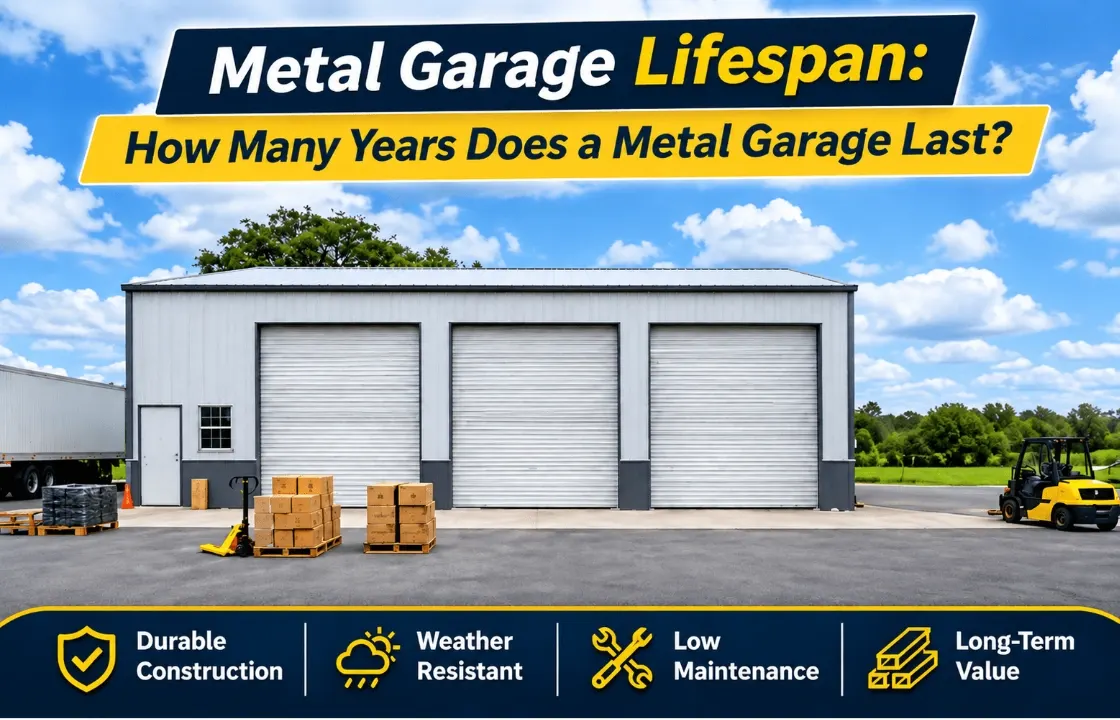
A metal garage can last several decades when it has suitable materials, protective coatings, proper installation, and consistent maintenance. Its actual lifespan depends on environmental exposure, building quality, and how quickly damage is addressed.
Garages near the Atlantic coast may experience greater exposure to salt-laden air. Owners should pay particular attention to damaged coatings, fasteners, and exposed metal surfaces. Follow the manufacturer's cleaning and coating recommendations.
You can use a pressure washer if the manufacturer permits it. Use an appropriate setting and avoid directing high-pressure water at panel overlaps, fasteners, seals, and ventilation openings.
Yes. After a hurricane or severe storm, check for visible roof damage, displaced panels, loose gutters, fallen branches, and water entering the building. Keep away from damaged electrical equipment or unstable structural areas, and contact a qualified professional when needed.
BLACK FRIDAY & CYBER MONDAY SALE! UP TO 30% OFF |View Offer >>
BLACK FRIDAY & CYBER MONDAY SALE! UP TO 30% OFF |View Offer >>
BLACK FRIDAY & CYBER MONDAY SALE! UP TO 30% OFF |View Offer >>
BLACK FRIDAY & CYBER MONDAY SALE! UP TO 30% OFF |View Offer >>
BLACK FRIDAY & CYBER MONDAY SALE! UP TO 30% OFF |View Offer >>
BLACK FRIDAY & CYBER MONDAY SALE! UP TO 30% OFF |View Offer >>
BLACK FRIDAY & CYBER MONDAY SALE! UP TO 30% OFF |View Offer >>
BLACK FRIDAY & CYBER MONDAY SALE! UP TO 30% OFF |View Offer >>
BLACK FRIDAY & CYBER MONDAY SALE! UP TO 30% OFF |View Offer >>
BLACK FRIDAY & CYBER MONDAY SALE! UP TO 30% OFF |View Offer >>
BLACK FRIDAY & CYBER MONDAY SALE! UP TO 30% OFF |View Offer >>
BLACK FRIDAY & CYBER MONDAY SALE! UP TO 30% OFF |View Offer >>
BLACK FRIDAY & CYBER MONDAY SALE! UP TO 30% OFF |View Offer >>
BLACK FRIDAY & CYBER MONDAY SALE! UP TO 30% OFF |View Offer >>