Metal Garages
June 13, 2026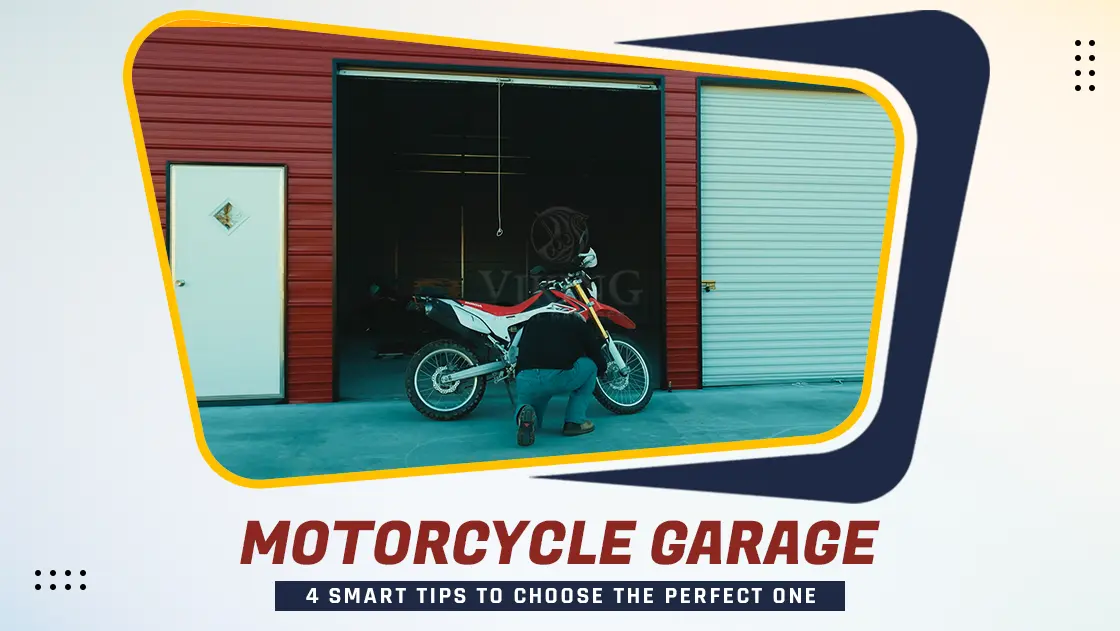
If you’ve ever walked out to find your motorcycle covered in pollen, bird droppings, or a fresh layer of frost, you already know why a tarp isn’t a long-term plan. A motorcycle is an investment — sometimes a serious one — and the way you store it has a direct impact on how long it lasts, how much it’s worth, and how ready it is to ride when you want it.
A metal motorcycle garage solves that problem permanently. It’s a dedicated, weatherproof, secure structure built specifically to protect one bike or an entire collection from rain, sun, wind, theft, and the slow wear that comes from sitting outside year-round. This guide walks through everything you need to know before buying one — sizing, materials, security, cost, and the features that actually matter once the bike is parked inside.
Motorcycles take far less of a beating from daily use than they do from improper storage. UV exposure fades paint and degrades seats and plastics. Moisture works into chrome, wiring connectors, and brake components. Temperature swings stress batteries and seals. None of that happens inside a properly built steel structure.
A dedicated metal garage also solves a problem that a corner of the family garage or a flimsy cover never can: dedicated space. When a motorcycle has its own building, it’s not competing with the lawnmower, the car, or seasonal storage boxes for floor space. You can install a workbench, hang gear, mount tool racks, and actually use the space as a small workshop — something that’s nearly impossible when a bike is squeezed into the back corner of a shared garage.
Before settling on a steel structure, it’s worth understanding how the alternatives stack up. Here’s how the most common motorcycle storage options compare:
| Storage Option | Weather Protection | Security | Maintenance | Lifespan |
| Metal Garage | Excellent | High (lockable, solid walls) | Minimal | 30–50+ years |
| Wood Shed | Good with upkeep | Moderate | High (rot, pests, repainting) | 10–20 years |
| Plastic Shed | Fair | Low | Low | 5–10 years |
| Tarp/Cover | Poor | None | Low cost, high hassle | 1–3 years |
Metal garages offer the best combination of durability, security, and weather resistance of any option on this list. Structural steel framing resists wind, snow load, and forced entry far better than wood or plastic alternatives, and a quality steel building will easily outlast the motorcycles you store inside it.
Wood sheds have a classic look and decent natural insulation, but they require consistent upkeep — repainting, sealing, and moisture monitoring — to avoid rot and mold. For a high-value bike, that maintenance burden is a real downside.
Plastic sheds are lightweight and low-maintenance but offer minimal security and degrade under prolonged UV and heat exposure. They’re a reasonable short-term fix, not a long-term storage solution.
Tarps and motorcycle covers are the cheapest option and the least protective. They do nothing against forced entry, sag and trap moisture against the bike over time, and won’t stop debris damage. For anything beyond very short-term or seasonal coverage, they’re a stopgap at best.
If you’re storing a bike you actually care about, a steel structure is the only option on this list built to last as long as the motorcycle itself.
Sizing is where most buyers either get it exactly right or end up wishing they’d gone bigger. The good news: motorcycles take up far less floor space than cars, which means even a modest-sized steel building can comfortably house multiple bikes plus storage.
A 12′ x 21′ building is the realistic minimum for one motorcycle with comfortable clearance to walk around it and open any storage you add later. This size also leaves enough wall space for a workbench or shelving along one side.
For multiple bikes, 18′ x 21′ to 20′ x 25′ gives enough width to park bikes side by side with room between them, plus a dedicated section for tools, gear, and a small workbench.
If the building needs to double as a maintenance and detailing space — not just storage — plan for 24′ x 30′ or larger. This gives you room for a lift, a full tool wall, and enough clearance to work around the bike from every angle without bumping into stored items.
For showroom displays, dealership inventory, or larger personal collections, clear span metal buildings up to 60 feet wide or more eliminate interior support columns entirely — letting you arrange bikes however you like and giving visitors room to walk through and view them without obstruction.
A sizing rule worth following: add at least 2–3 feet of clearance around each motorcycle for comfortable maneuvering, and don’t forget to budget extra length if you plan to add a workbench, tool cabinets, or a lift down the road. The most common regret we hear from buyers isn’t that they went too big — it’s that they wish they’d sized up.
Not all metal garages are built the same, and the difference shows up in how well the structure holds up over decades, not just years.
Framing steel is typically available in 14-gauge or 12-gauge. The lower the gauge number, the thicker and stronger the steel. For a motorcycle garage that needs to handle wind, snow, and the occasional accidental bump, 12-gauge framing offers a meaningful durability upgrade over lighter options, especially in regions with real winter weather or high wind exposure.
Wall and roof panels commonly come in 29-gauge or 26-gauge steel. 26-gauge panels are thicker and more dent- and impact-resistant — worth considering if hail, debris, or heavy storms are a factor where you live.
Roof style affects both weather performance and long-term durability:
A motorcycle is one of the more theft-prone vehicle types simply because of how portable it is once someone gets it moving. A solid steel structure is your first line of defense, but a few additions make a real difference:
Solid steel walls and doors. Unlike a wood shed or fabric cover, a fully enclosed steel building gives a would-be thief nothing to cut, pry, or tear through quickly.
Quality locking hardware. A deadbolt lock on the walk-in door and a slide bolt or padlock hasp on the roll-up door are the baseline. Keyed entry on both is worth the small upgrade.
Motion-sensor lighting. Cheap to add, genuinely effective at deterring nighttime tampering, and useful for late-night access when you’re working on the bike.
Security cameras. A basic battery or Wi-Fi camera covering the entrance gives you remote visibility and a recorded deterrent.
Smart automatic openers. For roll-up doors, app-controlled openers let you check the door status remotely and get alerts if it’s left open.
For dealerships or larger collections, digital access monitoring and zoned camera coverage become worth the investment — particularly when multiple high-value bikes are stored in one building.
A motorcycle garage rarely stays just a parking spot. Once the bike is protected, most owners start using the extra square footage for maintenance, detailing, or simply hanging out with the bike — and the building should be planned with that in mind from the start.
Common additions include:
Workbench and tool storage. A fixed or wheeled workbench along one wall, paired with a tool cabinet or rolling chest, turns the space into a functional repair bay.
Gear and accessory storage. Wall-mounted hooks and shelving for helmets, jackets, and riding gear keep everything organized and out of the way of the bike itself.
Insulation for year-round comfort. If you plan to work in the space during winter or summer, insulation makes a noticeable difference in usability. Our metal garage workshop guide covers insulation options and layout ideas in more depth if you’re planning a dedicated workspace rather than pure storage.
Finished flooring. A bare concrete slab works, but epoxy coatings or interlocking floor tiles make the space easier to keep clean and far more pleasant to work in — especially if you’re doing oil changes or detailing inside.
Climate control. Electric or radiant heaters for winter, and a ceiling fan or portable AC for summer, keep the space usable in every season rather than just fair-weather months.
Pricing depends heavily on size, steel gauge, roof style, and any added features like insulation, windows, or extra doors. As a general guide:
Because every build is customized to the buyer’s size, roof style, and feature choices, the most accurate way to get a number for your specific situation is a direct quote. Request a free quote from Viking Metal Garages and a building specialist will walk you through pricing based on your exact size, location, and feature list — all quotes include delivery and installation.
Most buyers fall into one of two camps: those who want a standard size ordered and installed quickly, and those who want specific dimensions, door placements, or features tailored to their property and use case.
Prefab/standard sizing is faster to quote, often more budget-friendly, and works well if your needs match one of the common size ranges above.
Custom builds make sense when you’re working with an unusual lot shape, need a specific door configuration (side-entry vs. end-entry, depending on driveway access), or want to combine motorcycle storage with another use — like a small workshop or even a lean-to addition for extra covered parking.
If you’re unsure which approach fits your situation, our breakdown on prefab vs. custom single-car garages applies the same logic to motorcycle buildings and can help clarify which route makes more sense for your budget and timeline.
A metal motorcycle garage isn’t just storage — it’s protection for an investment that depreciates faster when it’s left exposed to the elements. Whether you need a compact single-bike building or a larger structure that doubles as a workshop, the right steel garage will outlast wood and plastic alternatives by decades while giving you a secure, organized space built around how you actually use it.
Viking Metal Garages builds and delivers custom metal motorcycle garages nationwide, with sizing, roof style, steel gauge, and security features tailored to your bike, your budget, and your climate.
Call us at (704) 741-1587 to talk through sizing and pricing with a building specialist — delivery and installation are included almost everywhere.
Expand each item below to explore a few helpful answers before moving to the next blog post.
A 12' x 21' building is the practical minimum for one motorcycle with room to walk around it comfortably. If you want space for a workbench or tool storage, size up to at least 14' x 24'.
Yes. An 18' x 21' to 20' x 25' building comfortably fits two to three motorcycles side by side, and larger clear-span buildings can house entire collections without interior support columns getting in the way.
For anything beyond short-term or seasonal use, yes. A steel structure protects against rain, UV damage, debris, and theft in a way a cover simply can't — and it lasts decades rather than a season or two.
A vertical roof generally offers the best performance across most U.S. climates, since it sheds rain and snow more efficiently than regular or boxed-eave roof styles and holds up better under wind load.
In most areas, yes, especially for fully enclosed structures above a certain size. Permit requirements vary by city and county, so it's worth checking with your local building department before ordering.
Yes. Insulation can be added during installation and makes a meaningful difference if you plan to use the space as a workshop or store the bike somewhere with extreme summer or winter temperatures.
Most metal garages are installed within one to three days once delivered, depending on size and site conditions.
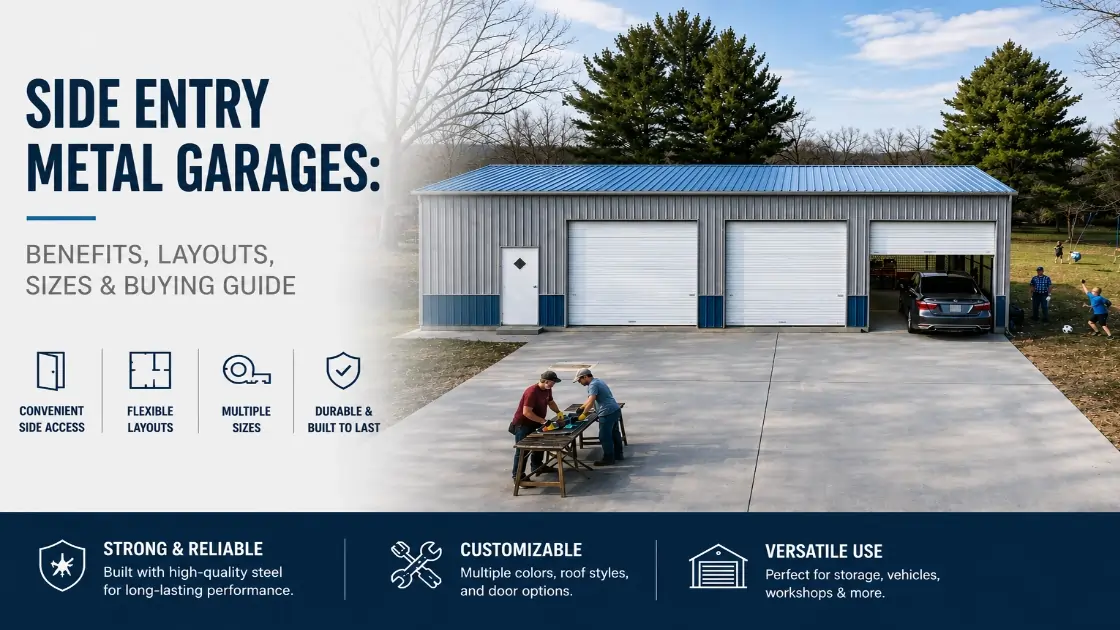
Side-entry doors are placed along the long wall of the building, which works well for narrow lots. End-entry doors are placed on the short wall and are often preferred when driveway access lines up straight into the building. The right choice depends on your lot shape and how you plan to pull the bike in.
Yes, flexible financing and rent-to-own options are available, making it easier to spread the cost out instead of paying the full amount upfront.
Summer Sale 2026 is LIVE! 30% OFF Ends Soon |Check Offer >>
Summer Sale 2026 is LIVE! 30% OFF Ends Soon |Check Offer >>
Summer Sale 2026 is LIVE! 30% OFF Ends Soon |Check Offer >>
Summer Sale 2026 is LIVE! 30% OFF Ends Soon |Check Offer >>
Summer Sale 2026 is LIVE! 30% OFF Ends Soon |Check Offer >>
Summer Sale 2026 is LIVE! 30% OFF Ends Soon |Check Offer >>
Summer Sale 2026 is LIVE! 30% OFF Ends Soon |Check Offer >>
Summer Sale 2026 is LIVE! 30% OFF Ends Soon |Check Offer >>
Summer Sale 2026 is LIVE! 30% OFF Ends Soon |Check Offer >>
Summer Sale 2026 is LIVE! 30% OFF Ends Soon |Check Offer >>
Summer Sale 2026 is LIVE! 30% OFF Ends Soon |Check Offer >>
Summer Sale 2026 is LIVE! 30% OFF Ends Soon |Check Offer >>
Summer Sale 2026 is LIVE! 30% OFF Ends Soon |Check Offer >>
Summer Sale 2026 is LIVE! 30% OFF Ends Soon |Check Offer >>