2 car garage
September 7, 2026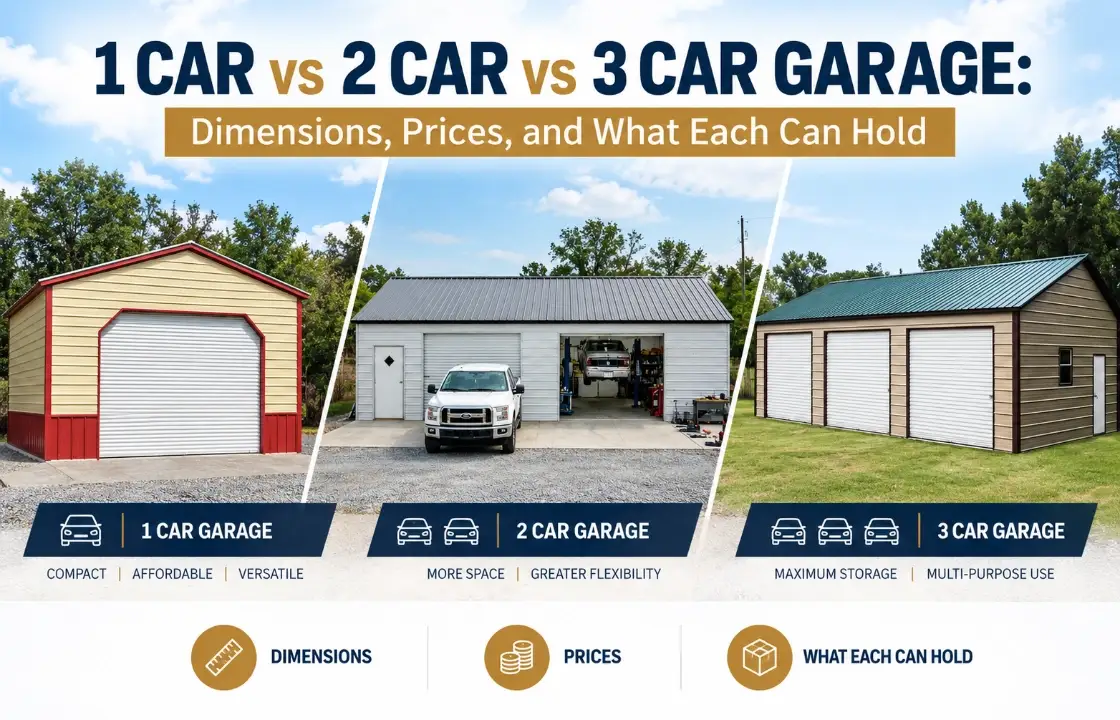
A garage can look spacious on paper and still feel cramped once two SUVs, a workbench, or a few storage shelves move inside. That is why the difference between a 1-car, 2-car, and 3-car garage is about much more than simply adding another parking spot.
The real question is what you want the space to do. A 1-car garage may be enough for everyday parking, while a 2-car garage can give you room for another vehicle, storage, or a small workspace. A 3-car garage opens up even more possibilities, but it also requires more space, a larger budget, and careful planning.
This guide breaks down the 1-car vs 2-car vs 3-car garage options by dimensions, typical prices, vehicle capacity, and practical uses so you can compare them before deciding how much space you actually need.
| Garage Type | Common Starting Size | Approx. Floor Area | Best Suited For |
| 1-car garage | 12×20 ft. | 240 sq. ft. | One vehicle + basic storage |
| 2-car garage | 20×20 ft. | 400 sq. ft. | Two vehicles + storage |
| 3-car garage | 30×20 ft. | 600 sq. ft. | Three vehicles or vehicles + workspace |
These are starting points rather than fixed rules. A garage for two compact cars can be smaller than one designed for two full-size trucks, while a three-car garage intended to include a workshop may need considerably more space.
A one car garage is usually the simplest option when you need enclosed parking for one vehicle without taking up unnecessary property space.
A 12×20 garage provides 240 square feet, which can work for a standard car with limited additional storage. Moving up to something like 14×24 gives you 336 square feet, creating more room for shelving, bicycles, tools, or a small workbench.
You can explore different one-car garage options to see how different dimensions can be configured for parking and storage.
Depending on the size and layout, you could use the space for:
A longer single-car garage can be particularly useful when you want storage without increasing the building’s width.
A 2-car garage gives you a significant increase in flexibility because you can park two vehicles while still reserving some space for storage or other uses. Common dimensions include 20×20, 20×30, 22×22, 24×24, and 24×30. A 20×20 layout provides 400 square feet, while a 24×30 provides 720 square feet.
The difference is substantial. A 20×20 may work when parking is the main priority, but a 24×30 can give you room for two larger vehicles, storage, and a dedicated work area. Explore the two-car garage guide; it lists the common widths of 20 to 24 feet and lengths of 20 to 30 feet, while noting that larger vehicles and storage needs may require a larger configuration.
A properly sized two-car garage can accommodate:
If you are comparing 1 car vs 2 car garage options, the biggest advantage of moving to two bays is not simply the second parking spot. It is the additional flexibility you gain for storage and everyday use.
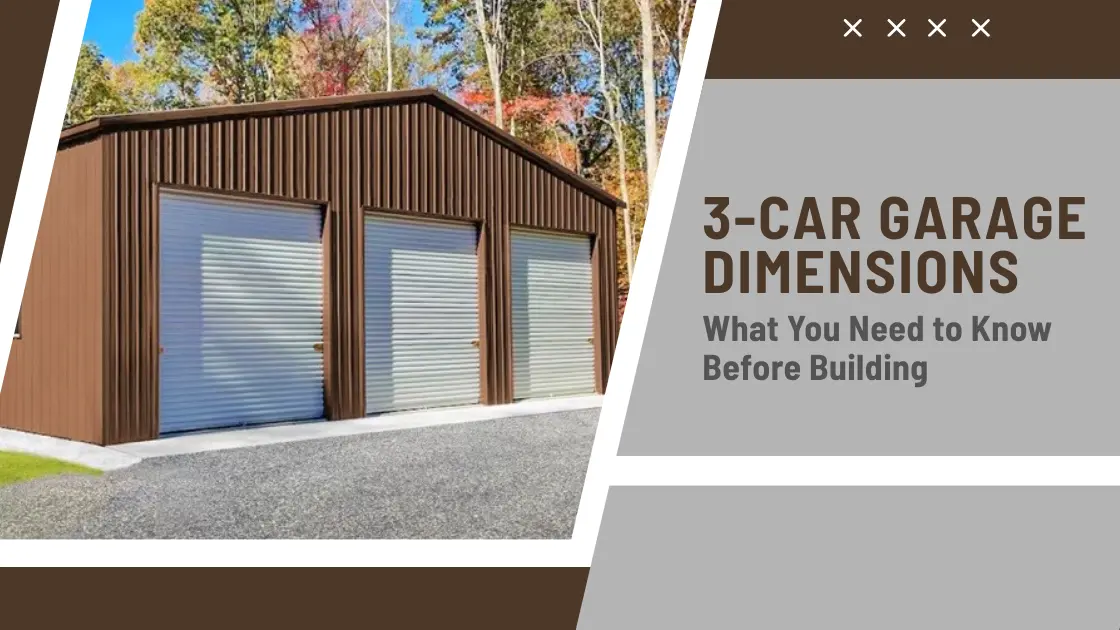
A 3-car garage requires substantially more width because three vehicles need space to park and move independently. Common examples include 30×24, 36×26, 38×26, and 40×30. A 30×24 garage provides 720 square feet, while a 40×30 provides 1,200 square feet.
Viking’s current three-car garage information lists widths from 24 to 40 feet and lengths from 20 to 50 feet, showing how widely these buildings can vary depending on vehicle size and intended use. For a deeper look at sizing, the 3-car garage dimensions guide covers common footprints and the factors that influence the final dimensions.
A three-car garage can be used for:
This is where a garage starts becoming more than a parking structure. Extra square footage can allow you to divide the building into separate parking, storage, and workspace zones.
The easiest way to compare the options is to look at how much floor area you actually gain.
| Example Size | Floor Area | Possible Configuration |
| 12×20 | 240 sq. ft. | One vehicle |
| 14×24 | 336 sq. ft. | One vehicle + storage |
| 20×20 | 400 sq. ft. | Two vehicles |
| 24×24 | 576 sq. ft. | Two vehicles + storage |
| 24×30 | 720 sq. ft. | Two vehicles + workspace |
| 30×24 | 720 sq. ft. | Three vehicles |
| 30×30 | 900 sq. ft. | Three vehicles + storage |
| 40×30 | 1,200 sq. ft | Three vehicles + substantial workspace |
The important takeaway is that garage width and length solve different problems. Width determines how comfortably vehicles sit side by side, while length gives you more room behind them for storage, tools, or workspace.
A garage should be sized around your actual vehicles rather than simply the number of vehicles. Two compact cars require less room than two full-size pickup trucks, and three sedans need less space than three large SUVs.
Before selecting your dimensions, measure:
For example, a 20-foot-wide garage may technically accommodate two vehicles, but a 24-foot-wide layout can provide noticeably more breathing room for larger vehicles and wall storage.
The biggest difference in the 2 car vs 3 car garage decision is not simply the extra parking bay. It is the amount of flexibility that comes with additional floor space.
A 2-car garage may be enough for two daily vehicles and moderate storage. A 3-car garage becomes more attractive when the third bay can serve another purpose, such as equipment storage, a workshop, a hobby area, or occasional vehicle parking.
Consider a 30×30 garage with 900 square feet. If you only need two parking spaces, the third portion can become a dedicated workspace instead of simply remaining empty.
That can make a 3-car garage worthwhile even when you own only two vehicles.
Garage costs depend on size, materials, roof style, doors, and customization. The table below gives a general estimated range to help compare the typical cost of 1-car, 2-car, and 3-car metal garages.
| Garage Type | Typical Size | Estimated Price Range |
| 1-Car Garage | 12×20 to 14×25 | $4,000–$9,000 |
| 2-Car Garage | 20×20 to 24×30 | $7,000–$20,000 |
| 3-Car Garage | 30×24 to 40×30 | $9,000–$30,000+ |
The building footprint is important, but several other decisions can increase the total project cost.
This is why two garages with identical floor areas can have very different final costs.
Use your current needs as the starting point, but do not ignore how you expect to use the building several years from now.
If you are deciding between two and three bays, ask yourself one simple question: What will the third bay do? If the answer is storage, equipment, a workshop, or future vehicle space, the additional floor area may provide more value than simply adding another parking spot.
There is no universal winner in the 1 car vs 2 car vs 3 car garage comparison. A 1-car garage can be efficient for one vehicle, a 2-car garage offers a strong balance of parking and storage, and a 3-car garage makes more sense when you need additional vehicles, workspace, or substantial equipment storage.
The best starting point is to measure your vehicles, estimate your storage needs, determine how much workspace you actually need, and then compare the resulting dimensions with your available property and budget. Choosing based on those factors is much more reliable than selecting a garage simply because it is labeled as a one-, two-, or three-car model.
Expand each item below to explore a few helpful answers before moving to the next blog post.
Yes. A longer 2-car garage can dedicate one portion to vehicle parking and another to a workbench, tools, or hobby equipment. The layout should be planned so the workspace does not interfere with vehicle movement.
It can be useful if the additional bay will have a specific purpose, such as equipment storage, a workshop, or future vehicle parking. If you have no use for the extra space, a larger 2-car garage may be more practical.
Yes, provided the garage width, length, door opening, and wall height match the SUV's dimensions. Measure the vehicle before choosing the building rather than relying only on the "1-car" label.
Yes. A larger building may require more setbacks, driveway space, drainage planning, and available land. Local zoning and building requirements should be checked before finalizing the footprint.
It depends on how you use the space. Additional width generally improves side-by-side vehicle clearance, while additional length can create room for storage or a workshop behind parked vehicles.
Last Call for Summer Savings! Get Up To 30% Off |View Offer >>
Last Call for Summer Savings! Get Up To 30% Off |View Offer >>
Last Call for Summer Savings! Get Up To 30% Off |View Offer >>
Last Call for Summer Savings! Get Up To 30% Off |View Offer >>
Last Call for Summer Savings! Get Up To 30% Off |View Offer >>
Last Call for Summer Savings! Get Up To 30% Off |View Offer >>
Last Call for Summer Savings! Get Up To 30% Off |View Offer >>
Last Call for Summer Savings! Get Up To 30% Off |View Offer >>
Last Call for Summer Savings! Get Up To 30% Off |View Offer >>
Last Call for Summer Savings! Get Up To 30% Off |View Offer >>
Last Call for Summer Savings! Get Up To 30% Off |View Offer >>
Last Call for Summer Savings! Get Up To 30% Off |View Offer >>
Last Call for Summer Savings! Get Up To 30% Off |View Offer >>
Last Call for Summer Savings! Get Up To 30% Off |View Offer >>